 Ever since the Bolshoi joined the Mariinsky under one institutional umbrella, similar to the structure of the Imperial Theatres decades ago, when even the Warsaw Imperial Theatre was under the umbrella of Russian reign, the current organizational structure instigated a set of exchanges between the Bolshoi and Mariinsky on an annual basis when the ballet troupes change places, offering local audiences a chance to see what previously they wuold have to had travelled to witness.
The complex plot of “Marco Spada”, a unique ballet tale about a “noble bandit” who hides among the rich while stripping them of wealth, sits inside a three-act extravaganza set by Frenchman Pierre Lacotte for the Bolshoi. The Moscow company brought the production to Saint Petersburg for the first time in late June 2026, filling the Mariinsky’s second stage to the brim with many non-local audience members clamoring to see what the Moscow troupe had on offer.
Despite this reconstruction now being over a decade old, “Spada” is similar to some of the less well-known Petipa works (Pharoah’s Daughter comes to mind with its varied scenes and duration) which tend to include a lot of everything all in one production. It contains two ballerina roles, three leading male parts, plentiful ensemble work, and numerous pantomime scenes. The choreography features Bournonville-esque movements with plenty of batterie while the arms remain low (Lacotte’s signature specialty), performed in sumptuous costumes against detailed sets that shift from 3 different ornate palace scenes to a countryside cave setting for the last act. Even the chairs onstage in the palace scenes are covered in real velvet.
 The storyline indeed is a challenge to follow. Spada has a daughter named Angela, however given various casting arrangements, often Spada appears similar in age to the ballerina playing the daughter. This adds confusion if you’re not one to read the libretto before settling in. And that was the case for this cast. Then there are two main couples: Count Federicci is engaged to Sampietri but in love with Angela; Count Pepinelli is in love with Marchioness Sampietri, the governor’s daughter and the second main ballerina role (but as noted, she is engaged to Fredericci). And so the first love triangle begins as Pepinelli tries desperately to persuade Sampietri –already promised to Fredericci– to be his.
One must first understand the events in order to understand the dancing. In the first act, Spada’s cunning ways usurp the monetary collections that monk Borromeo has obtained from the villagers, and the monk is left empty-handed. Pepinelli witnesses Spada’s team of bandits enter Spada’s own house and warns him, not knowing they are all part of the same group. The team exits and Spada and his daughter dance an impressive, technical duet. It’s crucial to understand the roles of each character for this pas de deux is not romantic, but technical and virtuosic.
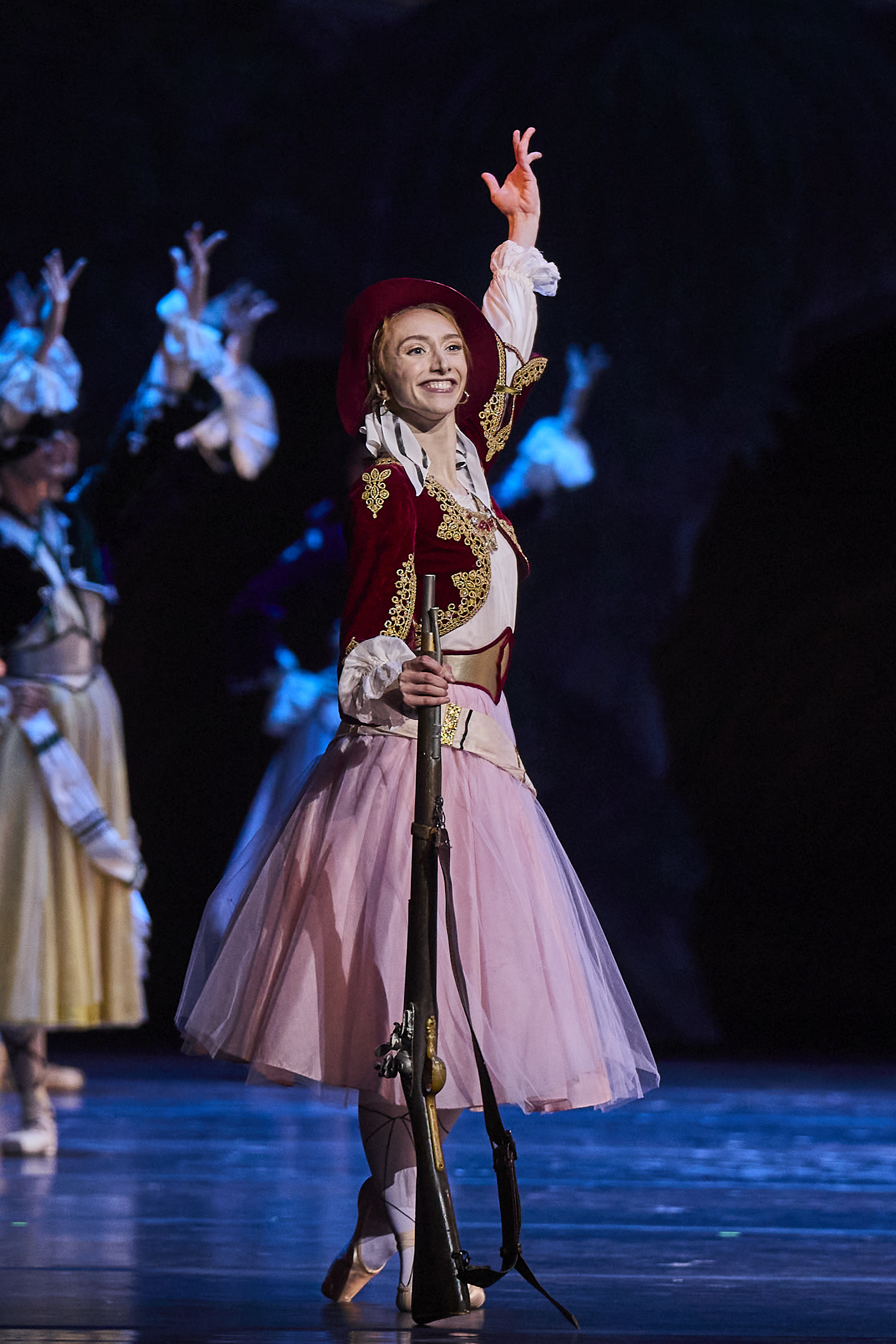 On June 24th Anastasia Smirnova performed Angela. A graduate of Ludmila Kovaleva at the Vaganova Academy, Smirnova first spent time as a soloist with the Mikhailovsky before migrating south to Moscow. Now with full stage mastery and impressive technique, Smirnova remains an elegant beauty who has the luxury of playing within the music during its lyrical sections. As Angela she appeared more a princess than a young girl, but this is due to casting and not age. In the two duets with Marco Spada, she kept pace with his every sissone, and her luxurious Act 2 variation combined lyrical grace with high extensions and pure lines. She retains her own Petersburg following from her years spent in the country’s northern capital, in addition to her newfound popularity in Moscow. She was welcomed warmly here and many in the city await her return.
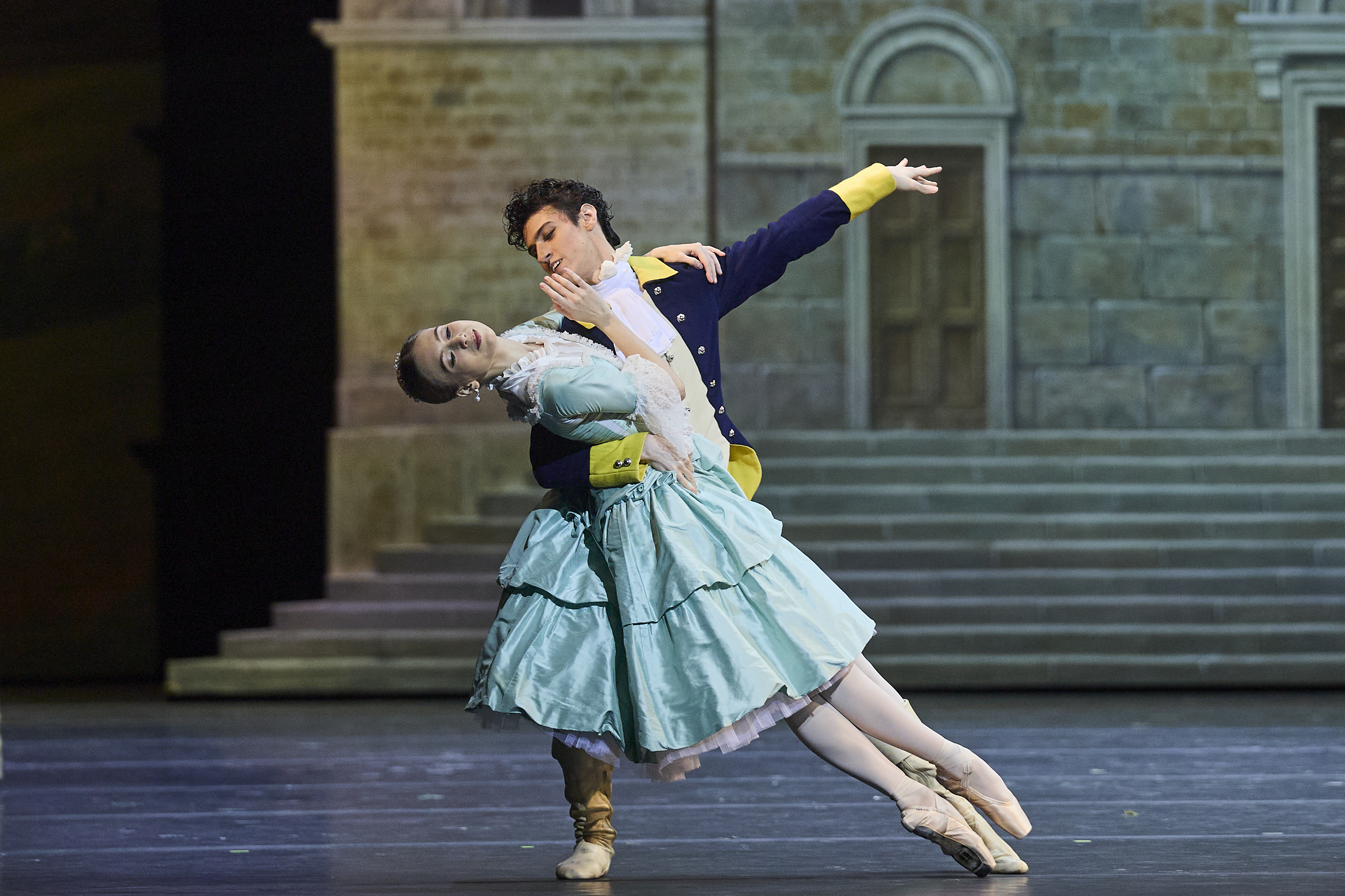
Yaroslavna Kuprina, a relatively new Bolshoi beauty, performed the role of Sampietri and the expressive Italian Filippo Ferdinando Pagani performed Pepinelli. Pagani’s technique is quick and strong –he lifted the graceful Kuprina with utter ease– but even more impressive were his pantomime scenes. As the court ladies urge him to approach Kuprina, he brushes them off, at first politely, and then he loses his cool, suddenly appearing like a toddler having a tantrum. The humorous sequence underscores the fairytale beneath this convoluted plot.
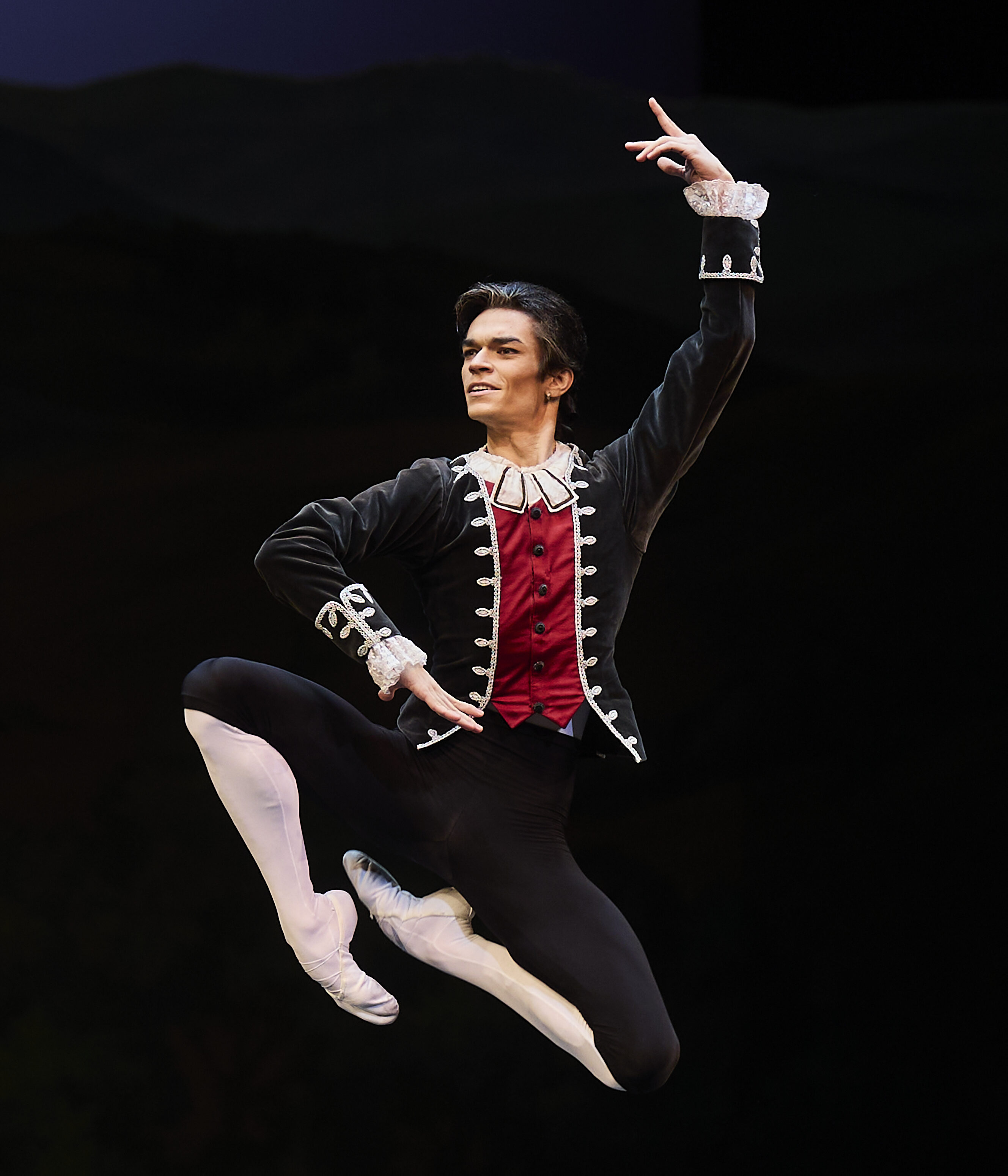
The star of the show, without question, was Dmitry Smilevsky as Marco Spada. Whatever people may say of other casts, Smilevsky does not just perform this role, he owns it. Despite the exhausting three hours of jumps and turns, Smilevsky has the endurance and grace of a tiger, and his jumps surpass any other principal in the troupe. For the Petersburg debut, he performed a special new double tour which lands on one foot, the working leg still in retiré passé, and then he pushes immediately into another double tour before finishing. The torque, energy, precision, coordination and sheer force needed for this type of jump –which is in fact a turn in the air — is something that no one in ballet has yet performed, at least not on Russian or American stages. Smilevsky is a powerhouse spitfire blessed with long legs and a slender physique. He performs any technical role 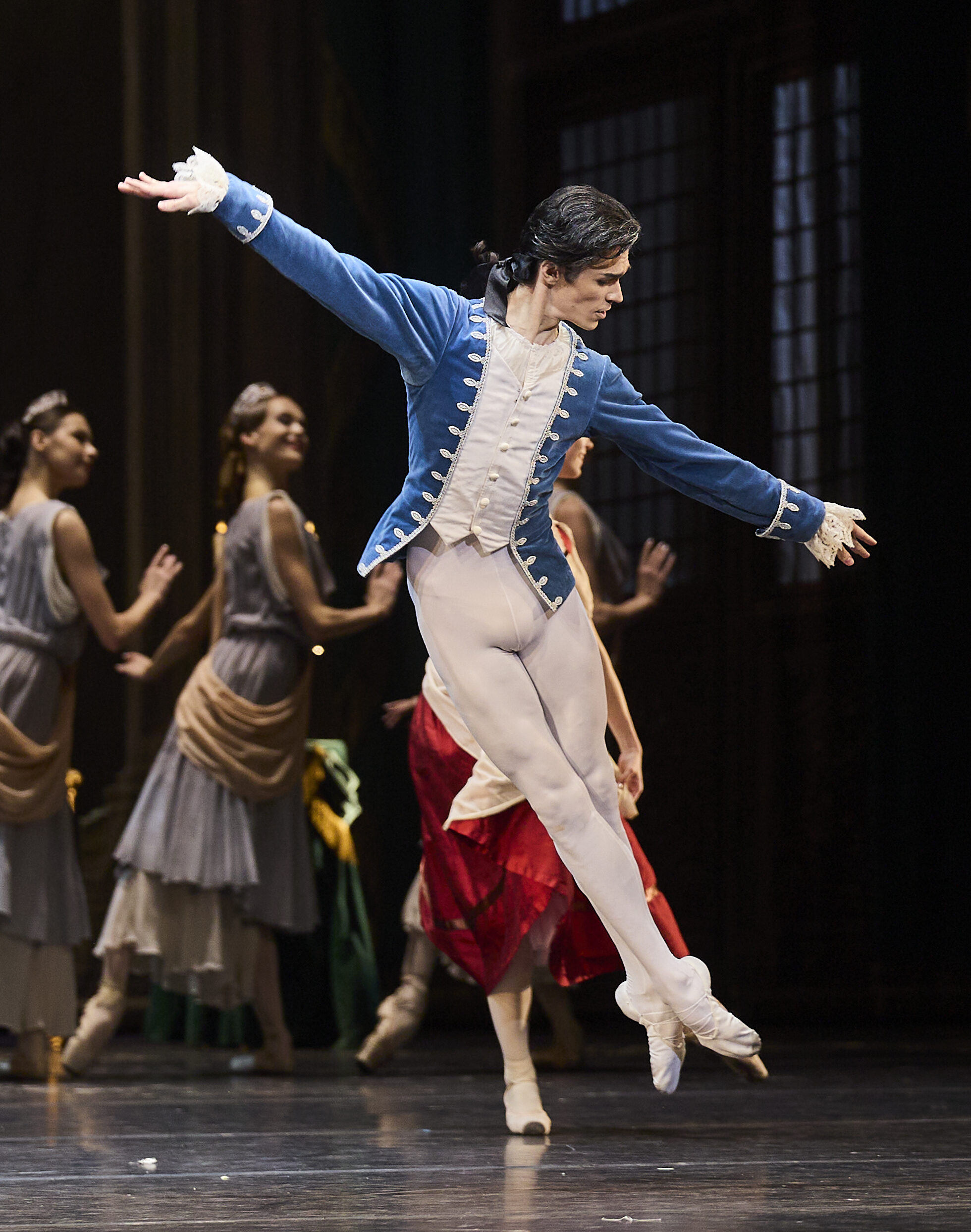 with easy mastery. And as an additional twist, all of his variations are done to the left, usually more difficult for most men. Smilevsky claims openly that jumps are his forté. Stay tuned to this website for our upcoming interview with him.
A bit more about the plot: In Act II, Spada and his daughter attend the Governor’s ball. Count Federicci, performed cooly by the noble Klim Efimov, expresses his interest in marrying Angela but the Monk Borromeo interrupts, complaining about the criminal on the loose. Angela guesses the truth about her father and simultaneously refuses Prince Federicci. In anger, the Fredericci/Efimov announces he will soon marry Sampietri/Kuprina instead, thus upsetting the lovesick Pepinelli/Pagani.
This act includes the corps de ballet, sweeping in gracefully with long cloaks to a ballroom scene in a palace. The extravagance of the setting is impressive, especially considering these sets travel with the company. Long duets ensue which include variations for each dancer involved.
Act III takes place in Spada’s cave. His criminal gang abduct Sampietra and Pepinelli. Spada sees his daughter dressed like a bandit. Brother Borromeo has to marry the Sampietra and Pepinelli. Suddenly a regiment comes from afar, Angela saves Federicci and the governor, but Spada is fatally shot. Before dying, he states Angela is not his daughter. This lie spares Angela from arrest and allows Prince Federicci to marry her.
Needless to say, with this endless spider’s web of relationships, the logic in “Marco Spada” is often lost. It’s unclear why a wealthy bandit retreats to a cave; or why the insistent Federicci is content in the end to marry Sampietri. But one cometh not for the plot: the highlight of this production is the choreographic challenges it sets for the experienced Bolshoi casts.
They exceeded the challenge, without question.
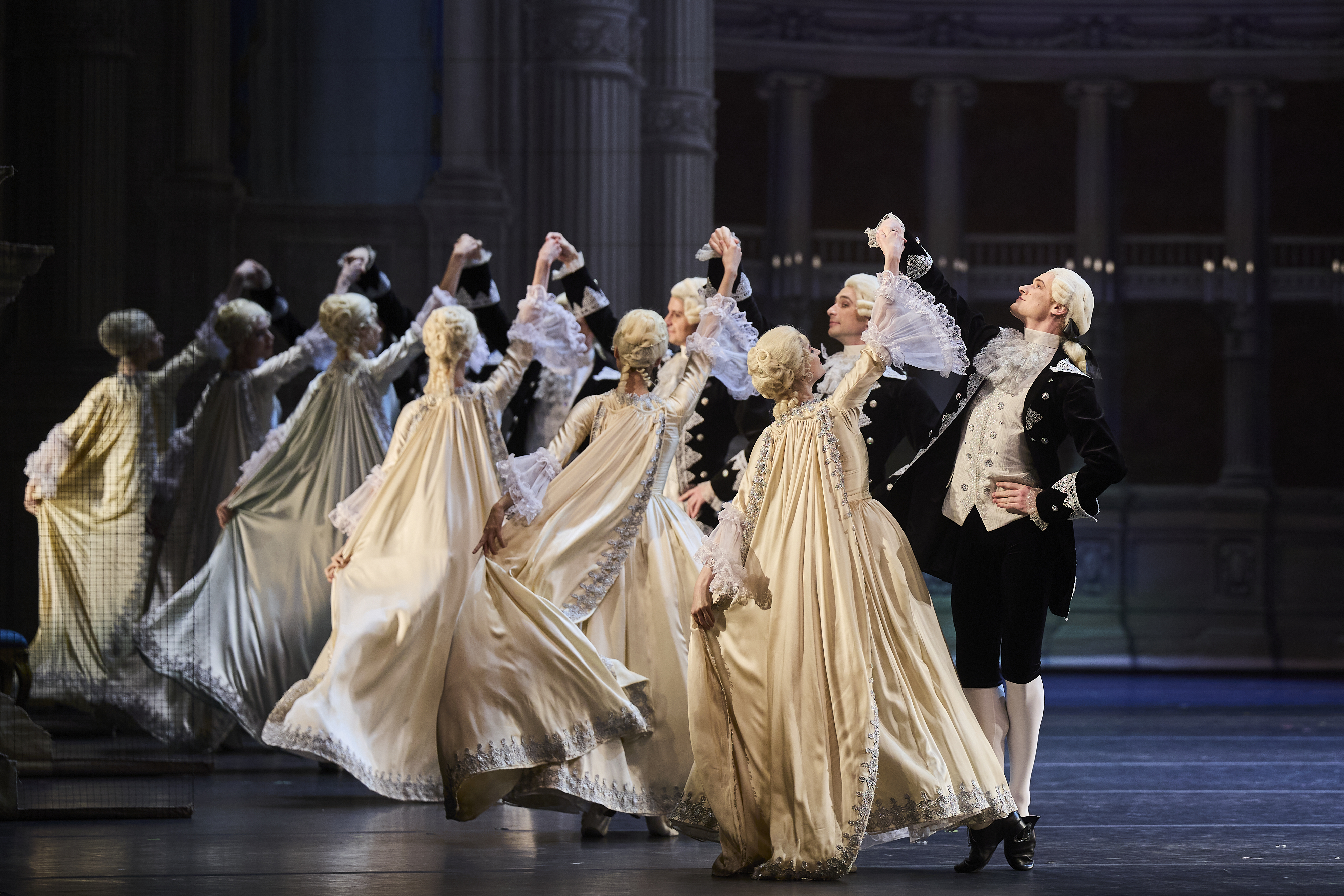
Photos all by Mikhail Vilchuk 2026 (c) Mariinsky Theatre. From top: Dmitry Smilevsky; Filippo Ferndinando Pagani with Yaroslava Kuprina; Anastasia Smirnova as Angela; Smilevsky (airborne); the Bolshoi corps de ballet in the ballroom scene.