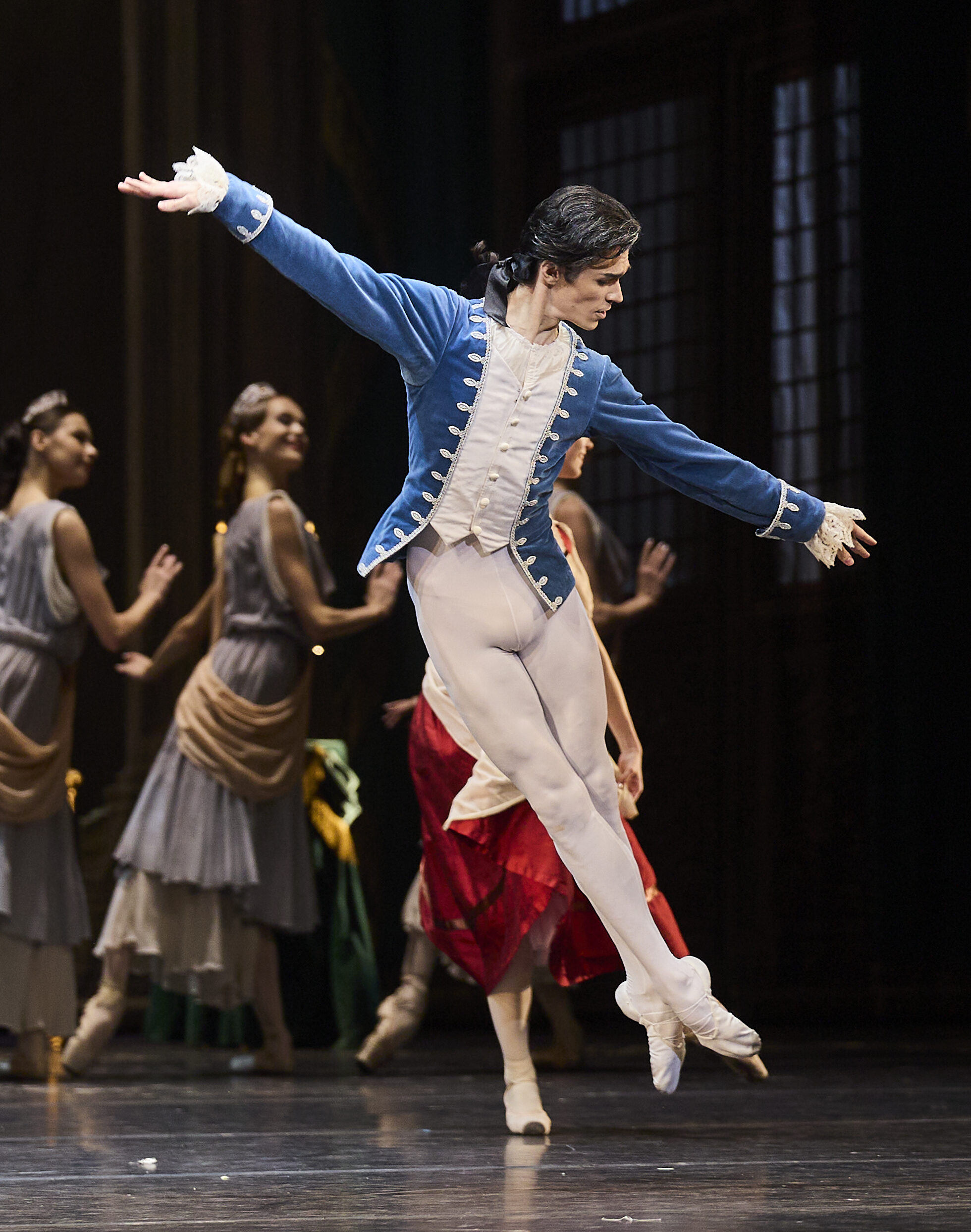
 The 2022 Gold Medal Winner of the Moscow International Ballet Competition, Dmitry Smilevsky, became a Bolshoi Principal Dancer at the young age of 23. Now 26, this inventor of unique jump combinations is forging new trends on social media as he carves a new space for the next generation of dancers and viewers. From playing darts in the dressing room, to performing never-before-seen pyrotechnics onstage, Smilevsky is certainly a trailblazer. Vaganova Today sat down with him during his recent Saint Petersburg visit to discuss his ballet roots and what life is like for such a young star. The Russian language version of this interview can be found here.
Your father, originally from Bulgaria, was invited to study in Moscow because he was the best student at his ballet school. Both of your parents are People’s Artists of Russia and work at the Stanislavsky Theatre. Your grandparents — Galina Krapivina and Mikhail Krapivin — were also teachers at this theatre and prima ballerina/principal dancers, respectively, just like your parents. They are also People’s Artists of Russia. So you’re the third generation of this dynasty. First question: did you want to follow in the footsteps of your relatives?
At first my parents just wanted me to try to continue their work. When the whole family is involved in the same thing, it’s much easier to help a child and explain all the nuances. They asked if I wanted to dance, and I wasn’t really opposed. At first, I didn’t really care because I was already doing ballroom dancing and figure skating. When they told me I had to enter ballet school, I thought: ‘Well, okay, I’ll go.”
I enjoyed being at the theatre by the time I was 15 years old. Before that, I didn’t quite understand what was going on. I liked dancing, but studying didn’t really incite any special enthusiasm in me
The first two years of study at the Bolshoi Academy were easy. But then, when the constant corrections started, when we weren’t allowed to get distracted, and classes ran all day, from morning till evening, I began to get bored.
In the early grades, we didn’t have the best relationship with our pedagogue. It seems it’s not easy for a woman working with boys. For the first four years, we often had female instructors—they’re gentler.
However, in the fifth grade, we switched to another pedagogue, Mikhail Yuryevich Sharkov. He changed everything in my learning. Thanks to him, many of us in our class began to see ballet differently. I even started taking general education subjects more seriously.
What was he like as a teacher?
Mikhail Yuryevich was strict with us. In ballet classes, he would approach us with a metal stick and, if we didn’t keep our backs straight, hit us with it. And after that, we always stood up straight, afraid it would happen again! Despite his strictness, Mikhail Yuryevich had a wonderful sense of humor. When everything was going well, he could joke and laugh with us. This created a great atmosphere in class. He captured our interest and became a true teacher. One day he told me that I should be ashamed of my behavior. He said that when I behave badly, it affects not just me, but also my parents. I thought about these words and realized that I was indeed behaving poorly. He wanted me to understand that my actions were hurting not me, but my parents. And sometimes, the school held meetings for parents, and my mother would cry at them. After my meetings with him, starting in fifth grade, my life changed a lot. I started to focus, I studied better, I got good grades in all subjects. I became more interested in ballet classes, I participated in competitions, attended different events. Life became better, more interesting. I’m grateful that this shift in my mindset occurred as I grew up thanks to Mikhail Yurievich.
For the first 4 grades, you had one teacher, and for the last 4 years, you studied under Mikhail Yuryevich. When you were graduating from his class, did you want to join the Bolshoi Theatre?
I knew I didn’t want to work at the Stanislavsky Theatre because my whole family works there. Everyone at the school knows my parents, and if I went there to work, my father would probably be my teacher. And that’s not easy either, when all the performers know that your dad is a principal dancer, your grandmother and grandfather are teachers, and they think that’s the reason why you’re dancing.
I realized I’d like to work at the Bolshoi, but I didn’t audition. I knew they would take me at the Stanislavsky. At the end of the year, I was waiting for news from the Bolshoi when they usually post the lists of those accepted and rejected. I hoped everything would work out in the best way.
When I saw that I was invited to join the Bolshoi, I was very surprised and happy. I realized that this was exactly the opportunity I had been missing, the reason I had been trying to improve and learn something new. When I was offered a job at the Bolshoi, it was just the beginning of a big and exciting journey. However, I wasn’t ready for what awaited me.
In what sense?
Until the last moment, I didn’t believe that after three years of doing almost nothing in the elementary classes, I could pull myself together enough to get into the Bolshoi Theatre.
 Was there any special adjustment in the first season?
After school, of course, everything feels very unusual. Every team has its own rules and work rhythm.
When you’re young, it seems like the Bolshoi is a place where everyone is jealous of each other and tries to ruin things – like putting broken glass in pointe shoes; these stereotypes exist. But when I started working there, I was entrusted with performances, I even had leading roles in the first year.
I didn’t expect such a friendly team. If you ask, they’ll help you. My mom told me that at the Bolshoi there’s a tradition similar to one at the Stanislavsky Theatre: when young people start work at the theatre, you sit in the dressing room and, in theory, should bring food or drink to the seniors. The idea is, “We’re here, coming to you.” We have a tradition that when you have a premiere in a performance, you bring pies and drinks to the dressing room. If there’s a free evening, we might take our colleagues somewhere, like to a park after the show.
I will never forget. One of my first lead roles was in “The Winter’s Tale.” I danced Florizel — one of the main characters. I went to the theatre that day with a suitcase that had a pie my mom baked, various juices and sodas. Back then, it was still possible to bring alcohol, and I took along two bottles of champagne.
After the performance, I went up to the stage manager and asked him to announce over the loudspeaker for the dancers to come to the dressing room. I set up a table there to celebrate my performance. I was curious to learn about traditions like that, which I had never heard of before.
Right now, I’m still sitting in the dressing room with the corps de ballet and I don’t want to move. We have a very friendly atmosphere, and I’m glad that all the stories I’ve heard about ballet turned out to be false. So far, no one has hurt anyone else.
What is it like to work alongside ballet stars who have been performing on the Bolshoi Theatre stage for many years?
I’m very happy that I have the opportunity to work with experienced dancers. From my very first season, I danced with different ballerinas: Ekaterina Krysanova, Evgenia Obraztsova, Anna Nikulina, and even Svetlana Yuryevna Zakharova. I danced with almost all the ballerinas who work in our theatre. I forgot to mention Anastasia Stashkevich. We participated in performances many times, and she was always ready to help me.
When I first started working at the theatre, I was scared to come to rehearsals. I didn’t know how to communicate with people like the theatre stars who have devoted many years to the art form. It was nice that there were never situations where someone would say: “He can’t do this, I won’t dance with him, he just arrived, I need to teach him again.” I’m insanely happy that all these people are so positive and always ready to help. If it was a ballerina, then as a dance partner, she always knew where was most comfortable for her and could give guidance. There was no aggression or resentment because I didn’t know something. Everything was natural: they explained things to me and helped me. Everyone gets along and we often perform in the same productions.
As for stars: Denis Rodkin invited me to his project. I’m part of the “Diaghilev” production which was recently performed at the Mariinsky Theatre (2026). Unfortunately, I couldn’t join the performance because I was on tour. We have this kind of tandem in almost all the premieres at the theatre. We all run into each other and rehearse together. I can’t even recall anyone with whom I might have bad relations.
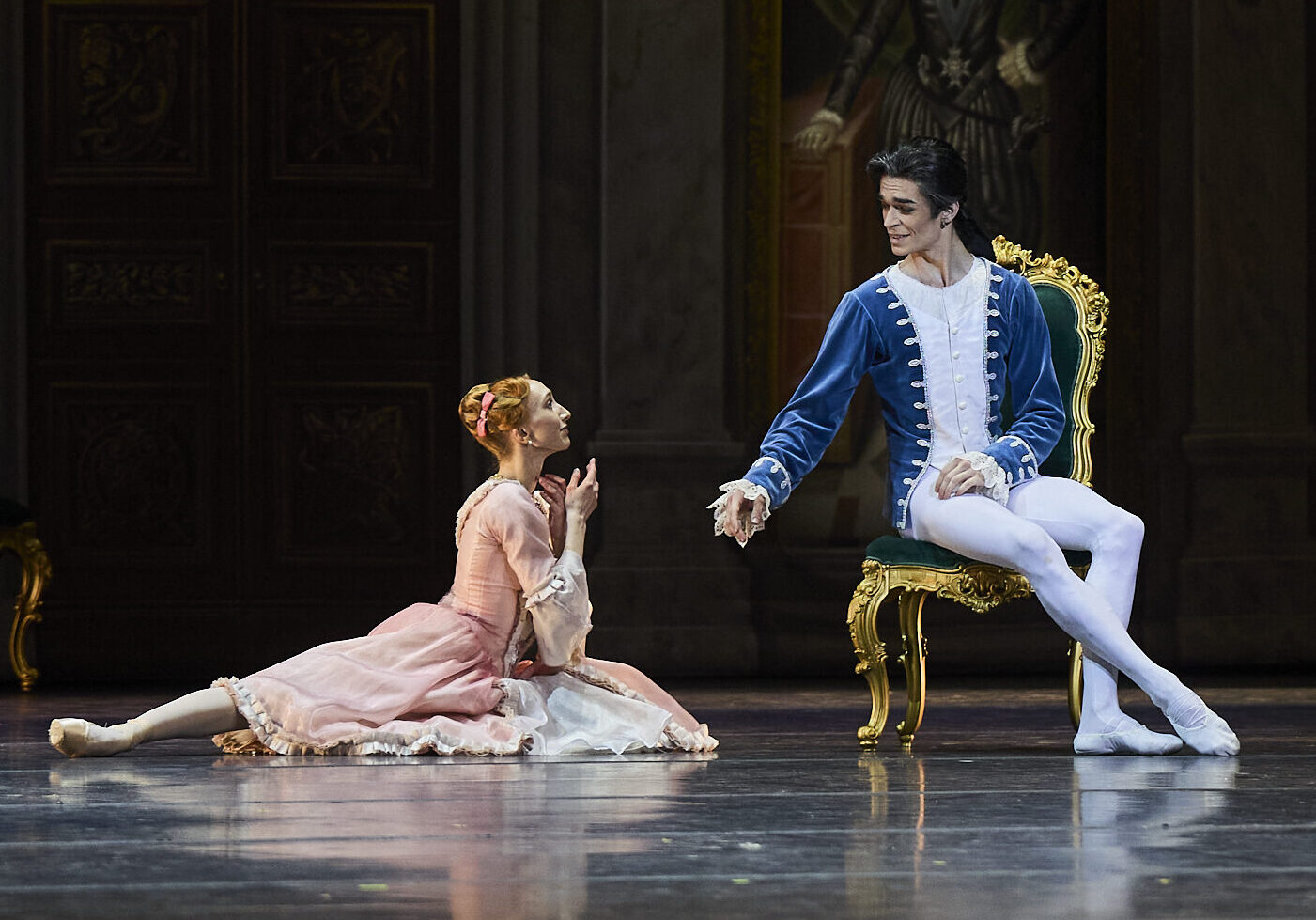
In June 2026, you performed at the Mariinsky Theatre in “Marco Spada” and amazed the audience with your unique, complex jumps. They were unusual, virtuosic, and difficult: you performed a double tour, landed on one leg, and repeated the tour [jump]. It seems that this tradition — creating new jumps while emitting the image of male strength — comes from former stars of the Bolshoi Ballet such as Vladimir Vasiliev, Mikhail Lavrovsky, Alexei Yermolayev. Where do you get your inspiration for such jumps? Does your current teacher help you create or find new steps?
I did that especially for Saint Petersburg, it was new, my first time. I haven’t done anything like this anywhere else.
I’d like to draw a parallel: when we were studying at the Academy, we had very technical guys from Japan in our class. They started ballet at an early age and were already trying various variations as children. When they joined, we were still boys who were just beginning our path in this art. And they were already able to dance variations from “Don Quixote.” We started competing with them to prove that we were capable too.
 At that time, social networks for ballet dancers began to develop, and we could see fragments of performances from all over the world. We realized that not all dancers do only what is set in the choreography. Many of them invent their own movements or try to make existing ones more complex. Take, for example, Ivan Vasiliev, who started doing triple jumps instead of doubles—a jump like his is something few dancers really stand out in if they perform it. We found old recordings of dancers like Julio Bocca and Tetsuya Kumakawa, and so many of them performed something interesting, adding something unique to the choreography thanks to their jumps and coordination.
I started applying these techniques to myself when I realized that I also have ability in jumps. It seems natural talent helps, since I’ve been able to jump well from birth. I developed my abilities starting with figure skating and ending with ballet school, working a lot on jumps and coordination. Jumping is something that comes to me easily and comfortably. For example, working on your extension is hard, you always need to stretch. Sitting in the splits is painful, but I can jump 30 times with no problem. However, I was able to achieve all this as an adult thanks to daily exercises and constant training. Jumping is something you can develop by working on coordination. But if a person has a small jump, some techniques can completely negate their initial potential.
There’s a saying that the men who have a jump don’t have a good extension, and vice versa.
Yes. You can see it in people when they lift their leg and it goes up uncontrollably. That’s just natural talent, everyone’s different. It’s rare that everything comes together at once. With experience, I realized that if I have a strong point — jumps — I need to focus on them so they overshadow weaknesses in other areas. That’s how I make up for my weak spots.
I think it’s the same for many people. If you have a good extension, you naturally compensate with beautiful lines. Beautiful jumps might then not be very high. If you turn well, you swap half your jumps for turns and everywhere you can you try to show how good your turns are. The most important thing, of course, is acting. No matter how cool your jumps or pirouettes are, if it all doesn’t come together into a single performance, it’s better to perform at gala concerts and competitions rather than in performances.
So, can we say that your jumps are a way to bring freshness to the classics?
Yes. Right now, our artistic director Makhar Hasanovich Vaziev watches all performances in the theatre. I can’t imagine how he does it. I think it must get boring. Indeed, time passes, it’s been 50 years now, and practically nothing new is appearing in ballet. Ballets are staged the way they were, and that’s how they go on stage. And now it makes sense to want to try something new because nobody really stages that kind of classic anymore; everyone has moved on to contemporary ballet.
Nowadays, it’s hard to find a choreographer who can create a production similar to those of Grigorovich or Petipa. Even if you take Nacho Duato, his modern performances are still quite unique. New classics aren’t really emerging. You want to try something, improve what’s already in existing ballet productions. Not everyone agrees with this, but my pedagogue Andrey Volotin and I are always looking for new options. Our goal is to make dance closer to the character’s image, rather than just adding more jumps and complex elements.
So, we can leave one jump in “Don Quixote” and another one can go to “The Flames of Paris.” In “Swan Lake,” for example, I always stick with the original choreography. If we add anything, it should be either from another act or from any other ballet that has the Prince’s choreography. Naturally, there can be no revoltades because the role doesn’t allow it. And we have to consider the costume too, even something as simple as a white tunic. If we take “Marco Spada,” no matter how much of a bandit he is, in the second act he appears in a classical costume. At the ball in white tights, there can’t be any stunts. Of course, when it comes to Lacotte’s choreography, adding anything new is an art that requires great skill. Every movement in his production corresponds to a specific note, and we are closely watched.
During the tour in Paris, I met with Lacotte’s assistants. They made a few remarks regarding the musical accents in “Marco Spada.” These assistants are strict: everything has to be done exactly the way they planned — both musically and choreographically. For example, if on a certain jump the hands are supposed to be down, you can’t change them, no matter how awkward it feels.
If you remember the performance with those two tours, a video was sent to me from social media showing a jump I could use in my own work, and they said, “Why don’t you try it?” I thought, “Why not?” You’ve got to try it somewhere, sometime.
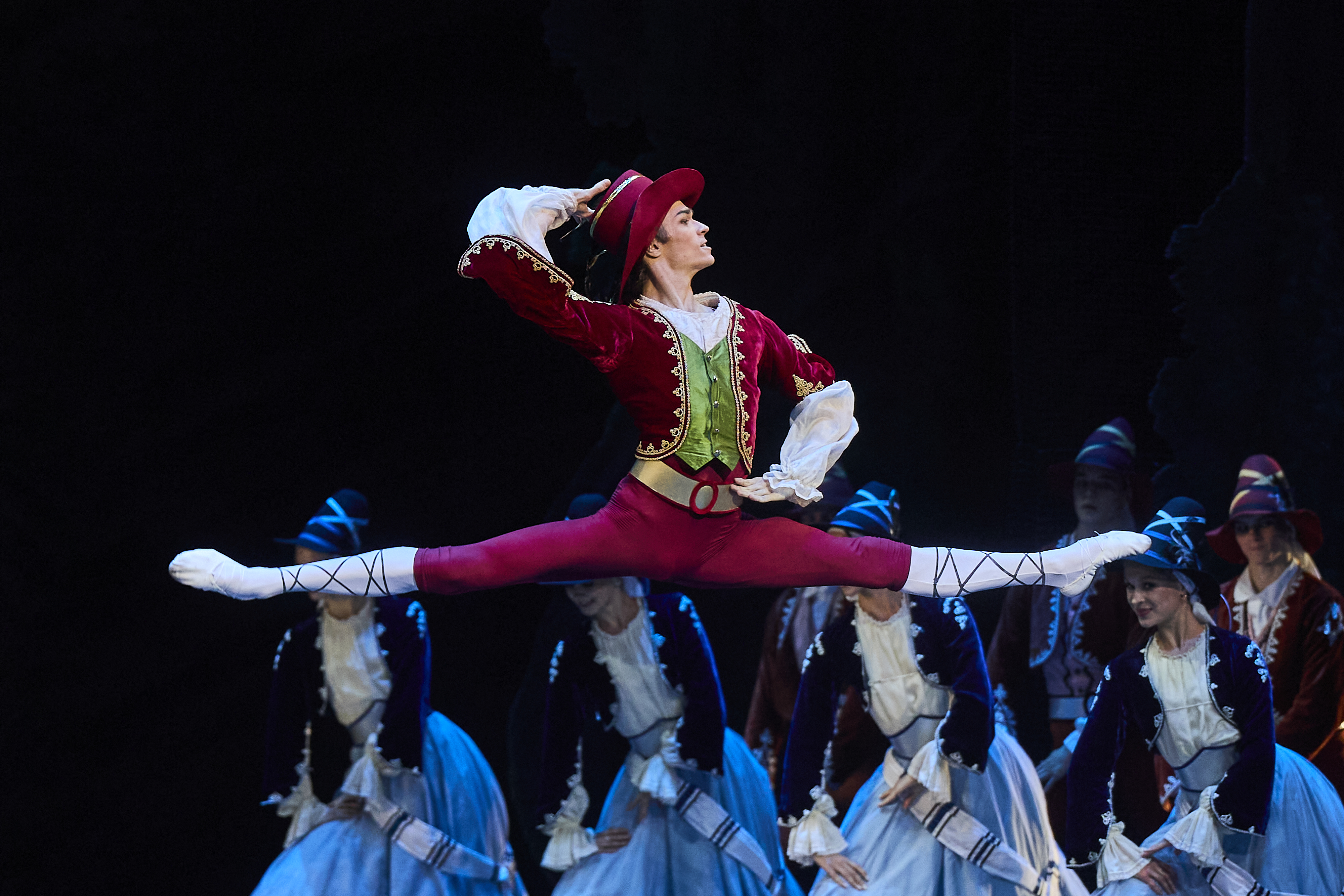
Andrei Leonidovich and I rehearsed, and I noticed that musically this movement fits. We imagined how it would look in the costume. We decided that in the third act of “Marko Spada” it would probably be interesting. Why not give it a try? Makhar Hasanovich came up after the performance and said, “Well, it’s interesting to leave it in.” So he’s also a supporter of these ideas, sometimes he even comes up with something himself.
I understand that not everything can be done on stage. Probably the easiest performance where you can try something unusual is “Chipollino.” It’s a fun children’s show [Editor’s note: the main character is a boy whose head is an onion] where there’s a chance to goof around and do tricks. There’s also a musical coda that nobody really knows how to fill out, so you can experiment. I started with “Chipollino,” when with each performance you could try something new.
Four years ago, when I took part in the Moscow International Ballet Competition [Ed. note: Smilevsky won the gold medal in 2022], Makhar Hasanovich himself suggested I participate. It was his idea; he chose variations from the ballet “Paquita” for my number. We found videos and were able to improve this complex variation. Now you can safely say it’s “Makhar Vaziev’s version”! We still perform this variation in “Paquita,” and it remains one of the most challenging. However, it was originally prepared specifically for the competition. And, as often happens, one thing led to another. I didn’t even suspect that Makhar Hasanovich was involved in developing artists. But he rehearsed with me, and gradually I started to realize that I could do things better. Sometimes people are against that. But usually in an entire performance I have only one or two variations, and it only takes a few minutes. Even if you add an extra jump in a two-hour show with drama and complex staging, like in “Giselle,” it won’t ruin the impression of the performance.
Many people don’t like the entrechat six in “Giselle”; they prefer the classical diagonal of brisés. But I honestly said that brisés are much harder for me to do, and I’m glad that I’m being made to perform the entrechat six. I hang on to this opportunity because through them I feel an emotional connection with my character. It’s not just a movement, but an attempt to convey some meaning about how I see my hero in this performance and how I’d like to communicate his role to the audience.
That is, when we dance, every technical element and variation of the dance should correspond to the image of the character. Maybe it doesn’t always work through acting alone, because it’s hard to jump and turn while at the same time expressing emotions with your face. But all movements have to be in the style of the production and the character. I strive to make sure that no changes disrupt the logic of the performance or the character.
Regarding “Giselle,” since the topic arose, how do you see Albrecht?
That’s a tough question, because each time I dance the role, I’ve had different thoughts about him. In our production at the Bolshoi, the first act ends with Albrecht crying over Giselle’s body, holding her to his chest. They stay in this position, the curtain closes, and then opens again on the same scene.
At the Stanislavsky Theatre, I saw another version. When the heroine was already dead, Albrecht tried to approach her, but his squire ran up, covered him with a cloak, and took him away. She lies there alone, and only Hilarion stands next to her. This version shows that for Albrecht, it was all entertainment. He wasn’t deeply in love, but he was curious. He wanted to meet her, spent time with her, and realized that he couldn’t say that Bathilde was his fiancée. He understood he had been a bad person, and they took him away.
The second act shows his remorse, him admitting his guilt, and realizing that he’s done wrong.
At the end of the ballet, with the sunrise, he survived and apologized to her. He realized he had been wrong. He stays at her grave and lies on it. That’s the only thing he can do to apologize to her. So, in the first act, he seems like a terrible person, but gradually he starts realizing his mistakes and feels remorse. He understands that he will suffer his whole life and always remember what happened. I had this thought.
And these entrechat six are Myrta’s punishment. She says, “We’ll make you dance until morning.” There are no gestures where she allows him to stop. She just says, “Dance.” He has to accept it; he can’t stop, his body does it for him. Gradually, he raises his arms in pleas and tries to ask her: “Please, stop, end it.” When Giselle runs out, she’s the only one who can save him. She says, “Come with me” and the coda begins. Essentially, she saves him.
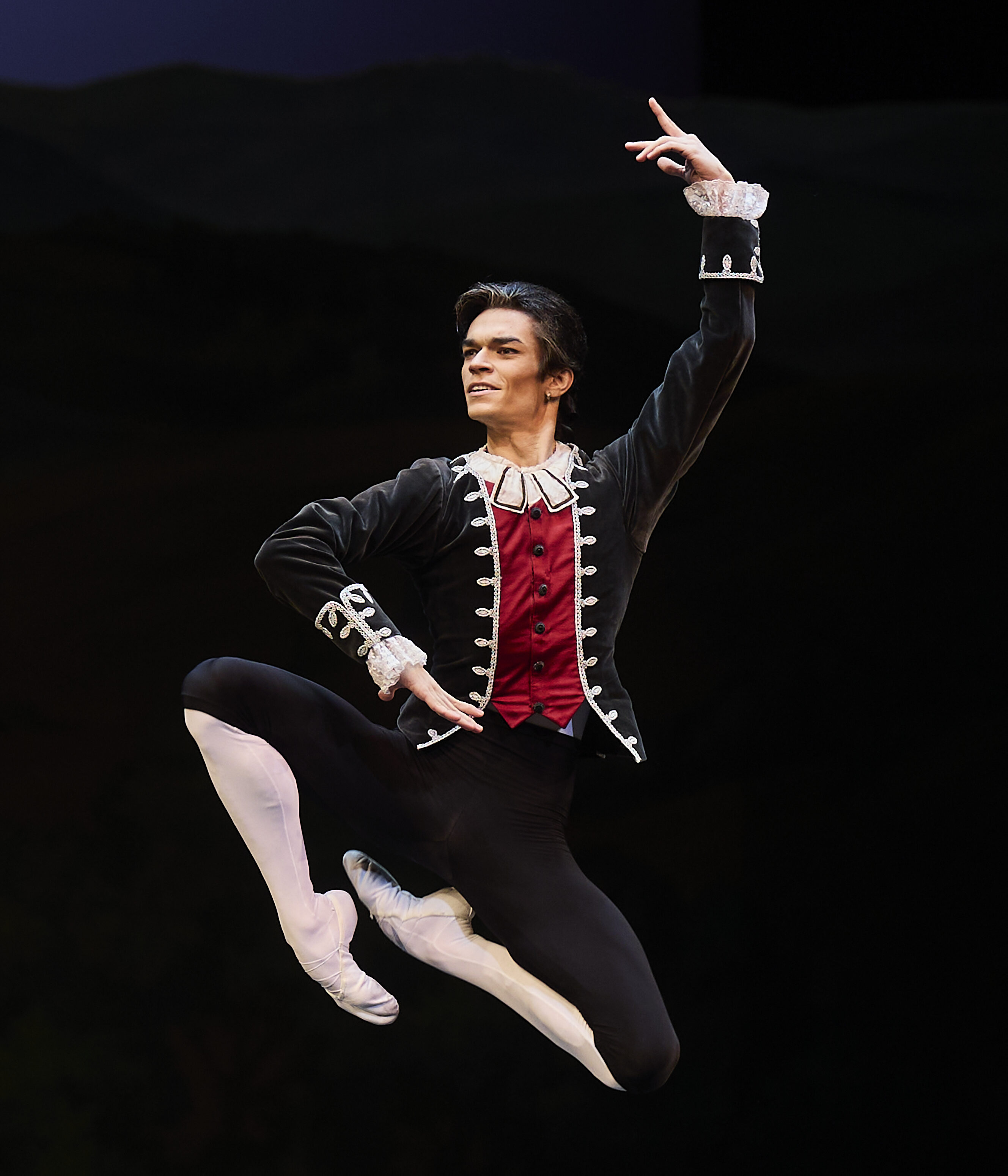 Many perform 32 entrechat six, two turns, and then a gesture to her asking: “Please, enough.” They enter and also do a circle after the brisés, and then continue the portion with Giselle herself. We had an option – a solution, rather – to do the entrechat six all the way to the end of the music, without stopping at all, and then immediately move on to the part with Giselle.
Many people online wrote that that’s a sport, a competition, or (almost mockingly) said, “Let’s count, is it 46 or 47?” Then I explained why I did it, why the idea even came into my mind, and what others did before me. Vanya Vasilyev sent me a video right away showing that he’d already done it several years ago. So I didn’t even set a new record. If that’s the case, where is the competition?
In the end, we decided on this option, which seems logical, but implementing it in the choreography isn’t easy. Many dancers get tired when doing 32 entrechat six, and here you need more than 40. It requires an additional 16 bars. We found a good explanation that fits the character well. Just like the case with Hilarion. Before that, there’s a moment when Hilarion dances, can’t stop, and keeps asking Myrta for mercy. She replies, “No.” Albrecht has a similar situation because Myrta treats him the same way she treats Hilarion. From her point of view, they both behaved poorly. And they’ll suffer for it.
I always feel sorry for Hilarion; he’s such a good guy. If he had kept quiet, she might not have reacted so sharply to his public invitation to all the guests. Then the bride showed up, and Albrecht, unable to do otherwise, publicly kissed her hand. For Myrta, all of this naturally added up. Albrecht, essentially, is to blame for what happened. However, if Hilarion had been more careful, things could have turned out differently.
So Albrecht pays for his mistakes. But did he love Giselle?
It depends. When I’m working on a performance, there are certain limits that I can’t break. The mise-en-scene is unchangeable, for example. But every time I dance “Giselle”, I try to figure out which Albrecht I want to introduce to the audience. My behavior at the first meeting with Giselle depends on it. Even the partner’s age plays a role. For example, dancing with an experienced ballerina like Ekaterina Krysanova, the audience sees the age difference, despite all our efforts. It’s not appropriate for Albrecht to treat her like a young girl. In such performances, I try to be more in love and show that my character really loved her, but could not escape with her to the village because of his fiancée. He was a good man and wanted to find true love, but his parents did not listen to his opinion, and he could not do otherwise. He had a fiancée, and he was supposed to marry her.
When I dance with young ballerinas like Lisa Kokareva or Masha Koshkareva, I feel older. At times like this, I can be tougher and play a negative character. In such productions, the bride (Bathilde) seems to be old and not as attractive as in the case of young and beautiful ballerinas. From the very beginning of the ballet, I can play a slightly negative character who really spoils the life of his beloved. And sometimes it’s only the partner’s age that can completely change the performance.
I like “Giselle” because every time I watch the videos, I find new facets, new opportunities for development. This is a production that I’ve been working with for many years, and it helps me grow as an artist. It’s one of the few roles I’ve wanted to dance since school. I danced “Giselle” probably in my third season here. I saw my father in this ballet. Then, in his heyday, Sergey Polunin danced it. I also attended his performance and really liked it. Almost all great dancers have danced “Giselle”. Everyone has a unique, interesting approach.
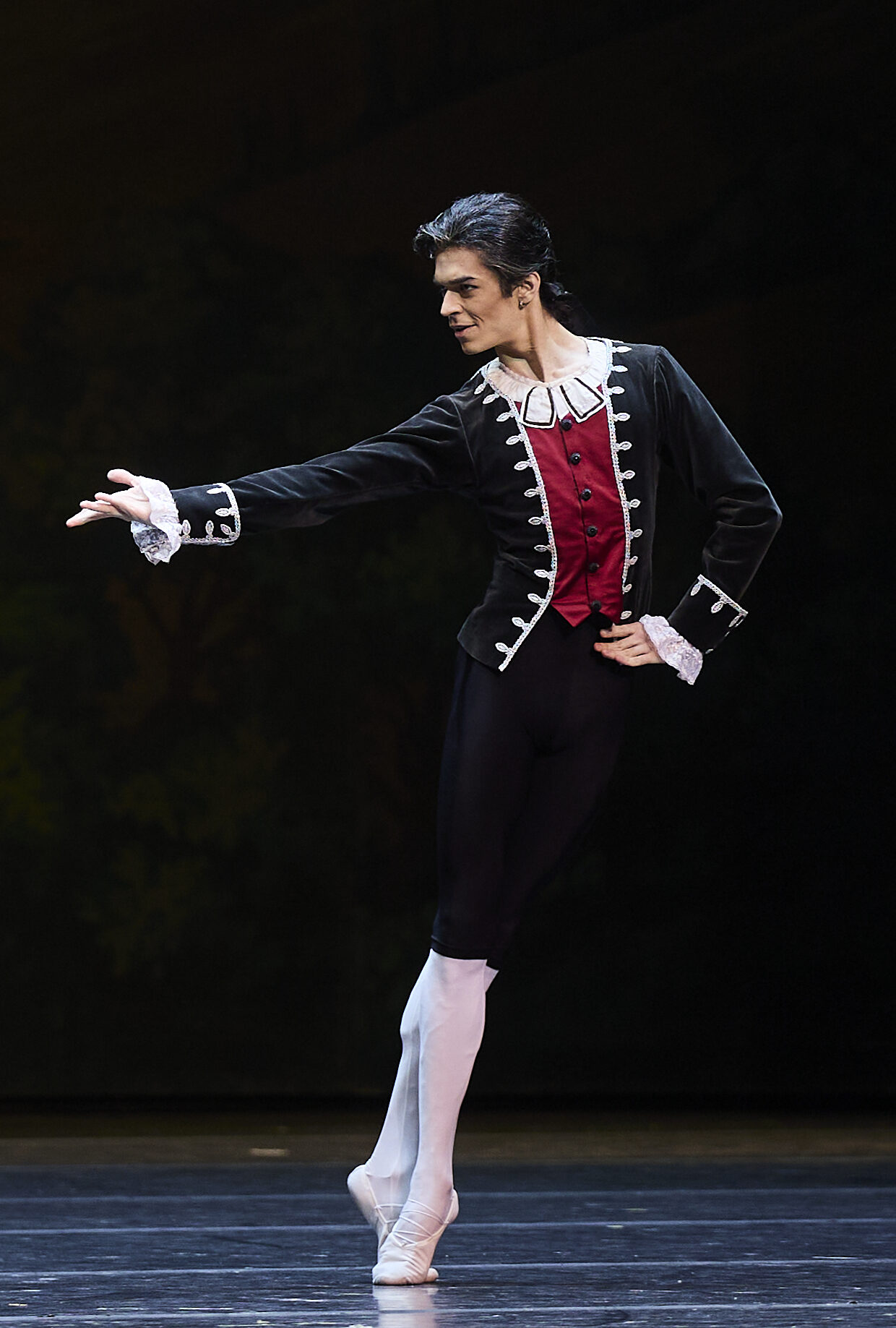 I don’t dance the brisés because I can’t repeat Baryshnikov’s movements. I would rather do what I do well and see the point in it, than what a person did 50 years before me, more brilliantly and with more talent, which would be embarrassing to me. It seems like so much time has passed, and we still can’t repeat his achievements.
Then you watch Lavrovsky’s recording in “Giselle”. It’s hard to single anyone out, because every dancer sees “Giselle” in their own way. Everyone has their own performance, and it’s always interesting to watch the development of this role. Compared to “Swan Lake”, “Giselle” is not such a difficult ballet, you can start dancing it at an early age. And with age, just as every artist’s Albrecht changes, so does Siegfried. It’s very interesting to watch. It’s probably one of my favorite performances so far. I’m always happy to dance it, to look for something new, to work on this performance.
You mentioned Baryshnikov, do you have any other idols?
We see a lot of talented artists in different troupes. Of course, we always respect those who have achieved success in life. After all, in order to reach such heights, you need to spend a lot of effort, time and labor. It’s especially difficult to break into leading theaters such as the Bolshoi or the Mariinsky, where solo roles are performed by real professionals in their field. To get the opportunity to dance in such theatres, you need to be truly talented.
If we talk about artists from previous generations, then perhaps I would single out Tetsuya Kumakawa. He was a true master of his craft, starting his career at the Royal Ballet, where he held the position of premiere danseur. At the age of 26, he left this troupe and founded his own, K-Ballet in Tokyo. He held various roles in it: director, dancer and choreographer. All this was possible thanks to his creative contribution. As a phenomenal dancer, he possessed unique abilities: an incredible leap and amazing turns. His unique abilities have made him an integral part of ballet history. It was a great honor for me to participate in a tour with his troupe and dance on the same stage with him. It was a childhood dream that I couldn’t even imagine. I saw his video and didn’t expect I’d ever meet him and dance with him in the same performance. But now that dream has come true.
I’d also like to mention the foreign dancer Julio Bocca, who came to the Bolshoi Theatre and conducted master classes. We know him from videos on social media and from his competition performances. He is a truly outstanding dancer with unique coordination of movements. Although he’s short, his dancing style impresses with its speed and plasticity — he is like the wind on stage. He made a huge impression on me.
Lavrovsky and Baryshnikov stand out as representatives from the previous generation. These people are on a special level for me. I think they were way ahead of their time in dancing. If Baryshnikov were dancing now, he would be the premiere of the theatre along with all the dancers. It seems that he should have been born just now, but even back then he was ahead of his generation.
Leonid Sarafanov is one of my favorite dancers, especially among those who recently retired. I’ve watched a lot of his videos, and I was pleased to see him at the Academy’s competitions and concerts. When he watched me dance, I was interested to hear his opinion. Sarafanov is a very talented dancer. I learned “Chipollino” from his videos.
But probably my main idol is my dad. From childhood to this day, I’ve enjoyed going to his performances. I’m amazed by his dedication: he has devoted himself to the theatre for so many years and is still in great shape. Even young artists can’t compare to him.
I remember two or three years ago when we went to Japan together, and he danced the “Auber” pas de deux [Grand Pas Classique]. Of course, he simplified the movements a bit, but he came on stage almost at the age of 50 and was able to dance this difficult pas de deux. For me, this is the hardest duet I’ve ever danced.
I have infinite respect for him as an artist: his impeccable technique, purity of execution, lines, noble image, and acting are incredible. I always wanted to dance in my own way, without repeating his movements, but at some point, I watch his videos anyway. And I’m incredibly happy I was born into such a family and was able to achieve what I have in this profession. My parents attend my performances; I have real professionals at home who I can always turn to for help.
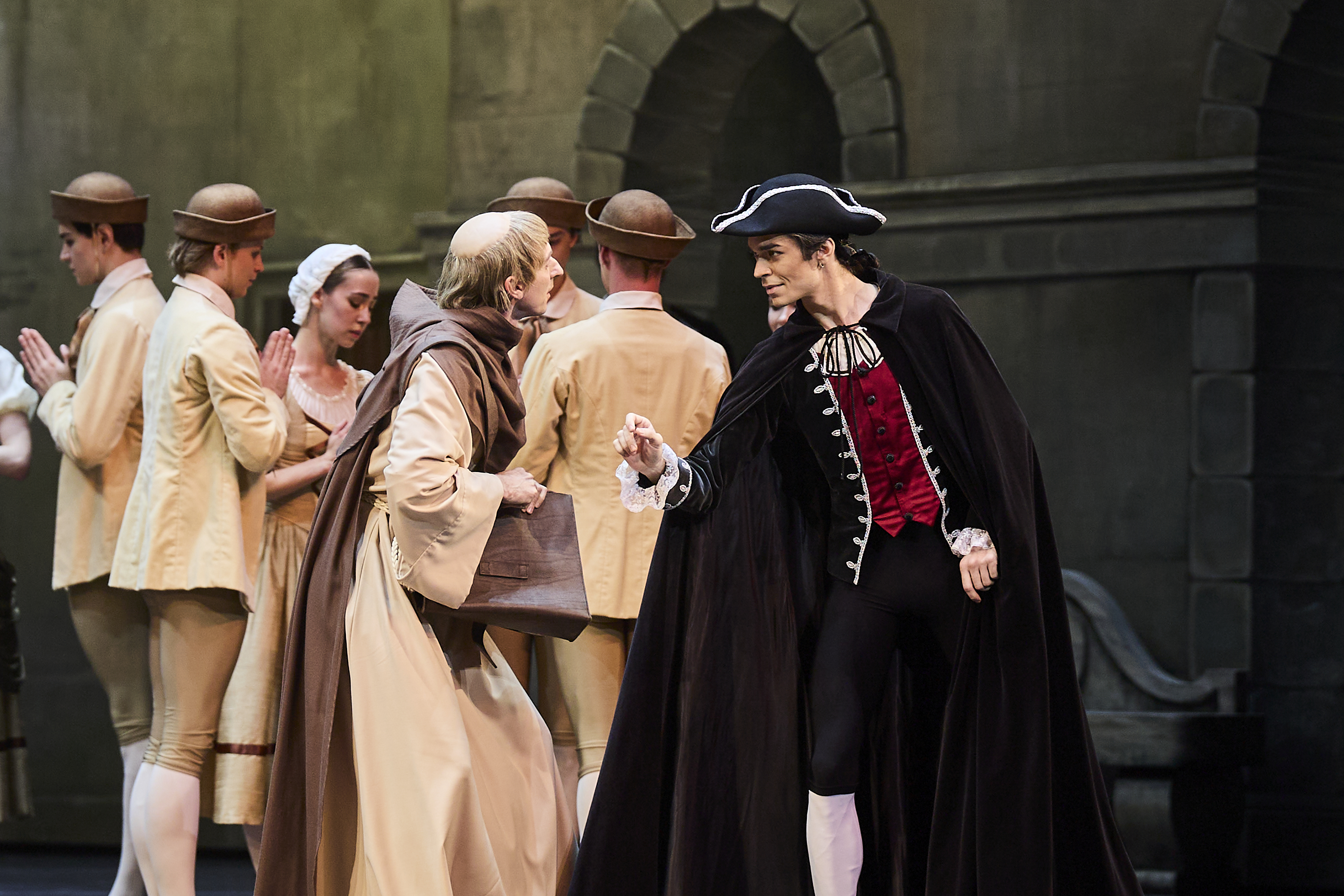
Have you ever worked with your father?
One day, when my teacher was leaving, and Makhar Hasanovich was out of town, I arranged for Dad to get a pass to the Bolshoi Theatre. It was probably the only week in my life when my dad and I officially rehearsed at the Bolshoi.
Many people think that children always rehearse with their parents. But during all the time we studied at school and worked in the theatre, my father and I probably worked together only five or seven times. I always cried afterward, saying I wouldn’t study with him again. If they told me at school that I needed go to the (Stanislavsky) theatre afterwards, I would return home and say that I wouldn’t go anywhere. It wasn’t until I was an adult that I realized working with him was a valuable experience that shouldn’t be missed.
When I was preparing for the premiere of “Carmen”, the Toreador’s role, Svetlana Zakharova invited me to dance with her in Novosibirsk. I’ve never danced this ballet before, and I probably haven’t even watched it more than once. I had neither the desire nor the opportunity to do this. But when I was informed that I’d be dancing with Svetlana Yurievna, I immediately agreed: “Of course, I’ll learn everything and do everything!” But I watched the video and realized that I couldn’t learn it. I was uncomfortable, I didn’t understand the complex choreography, and it was musically difficult.
I immediately called my father and asked him to help me. We worked every night for a week, for an hour, an hour and a half, two hours. He showed me everything in full, in order, in full step. I didn’t understand how he kept it all in his head, he hadn’t danced the Toreador for so many years, but he explained it easily. I think I even have a few videos of his lessons. He showed me a duet with a girl, checked the transitions and explained how everything should be.
As a result, I realized for myself that in the future, if similar situations arise, you shouldn’t be shy or afraid to ask for help, you should discard all stereotypes. After all, such an experience should not be missed. It’s is a unique opportunity that I have almost every day: I can call my dad and ask any question about any performance.
 Do you think you have a specific emploi?
It’s hard for me to say, because I’ve performed a lot of parts that I feel don’t fit my emploi. Outwardly, the prince’s roles are probably more suitable for me. I was surprised when I danced the Golden Idol (from “Bayadere”) and the pas de deux in Giselle. I used to think they weren’t for me.
Even when I dance “The Flames of Paris”, I sometimes wonder if this performance is right for me. I try to do my best, but sometimes I don’t understand why I’m dancing this role.
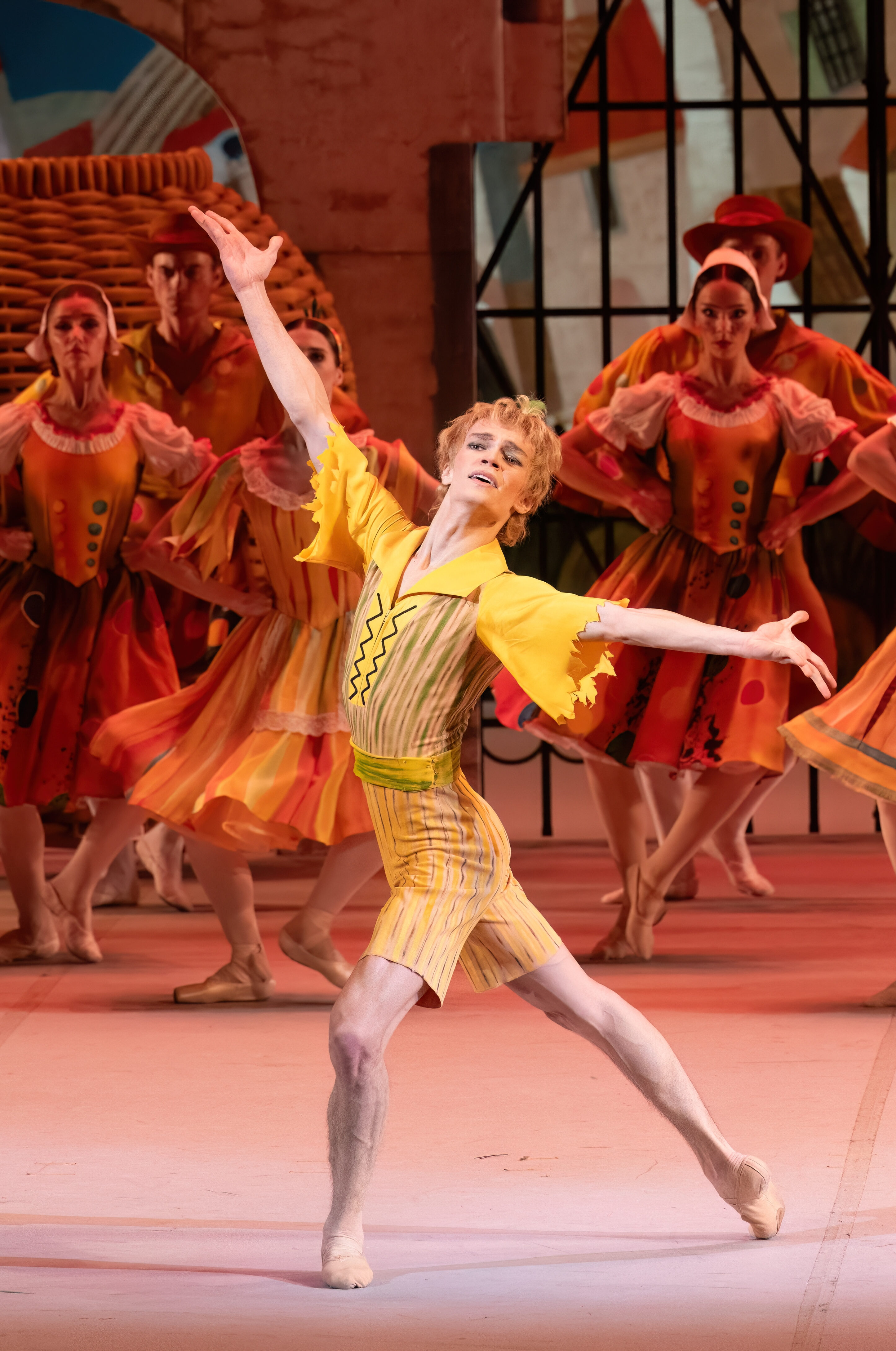
I don’t think “Chipollino” is my production. Probably, the role of “Count Cherry” [Editor’s note: another leading role in the production] would be more suitable for me, it’s more classical and similar to the prince. I saw my name on the list, I prepared almost the entire production, but I went on tour for a few days just at the moment when casting was posted, and I wasn’t there.
It was probably the only time in my entire career when I went to the director and asked: “Why am I not here? I was rehearsing, everything was ready.” He replied, “Do you want to dance it? I thought you didn’t need it.” I said, “Well, since you’ve offered, it’s like I want to!” He replied, “Well, we’ll do it now.”
That was the first time I danced in this production, and now I perform it in almost every block — this is the payback for my desire! The performance is very difficult, especially emotionally. It’s like it was created for children: everything is exaggerated and hypertrophied, it’s overdone. You have to be funny all the time. After such a performance, you come home exhausted and don’t want to do anything. I chose this role myself, but it seems to please the audience and I like it as well. The most important thing is that no one has ever written: “The role of Chipollina doesn’t suit him, it would be better if he danced Count Cherry here.”
“Marco Spada” is certainly a wonderful production. However, it can be difficult to choose an age-appropriate composition. I’m playing the role of the main character’s father, but there’s no ballerina in our theatre yet who’s 10 years younger than me. This can create a certain sense of ridiculousness.
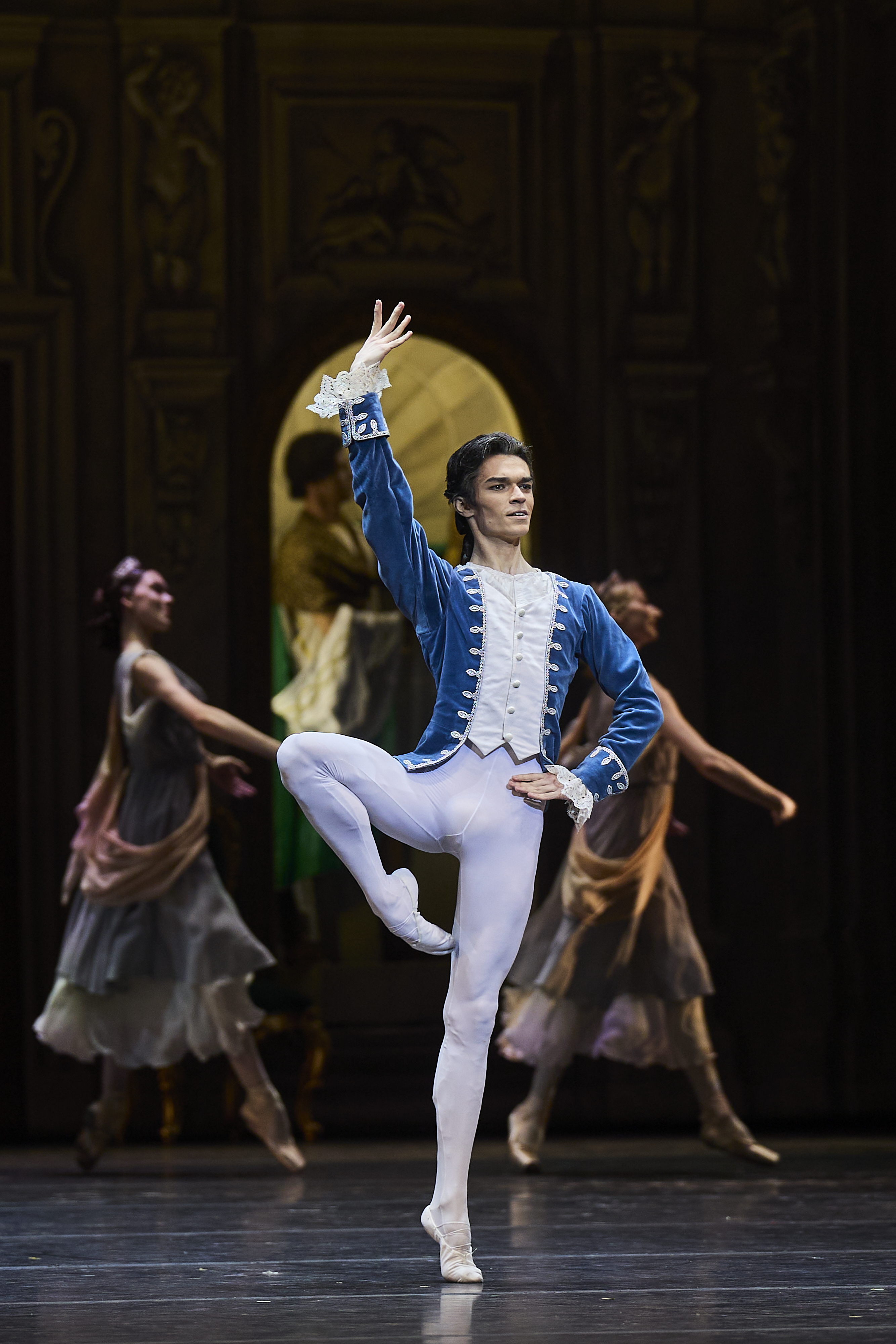
Overall, this production fits my emploi well. It has elements of choreography for a prince and technically challenging elements, especially in the third act, and a hard variation in the first act. I consider this performance to be one of the closest to my technical capabilities and my style.
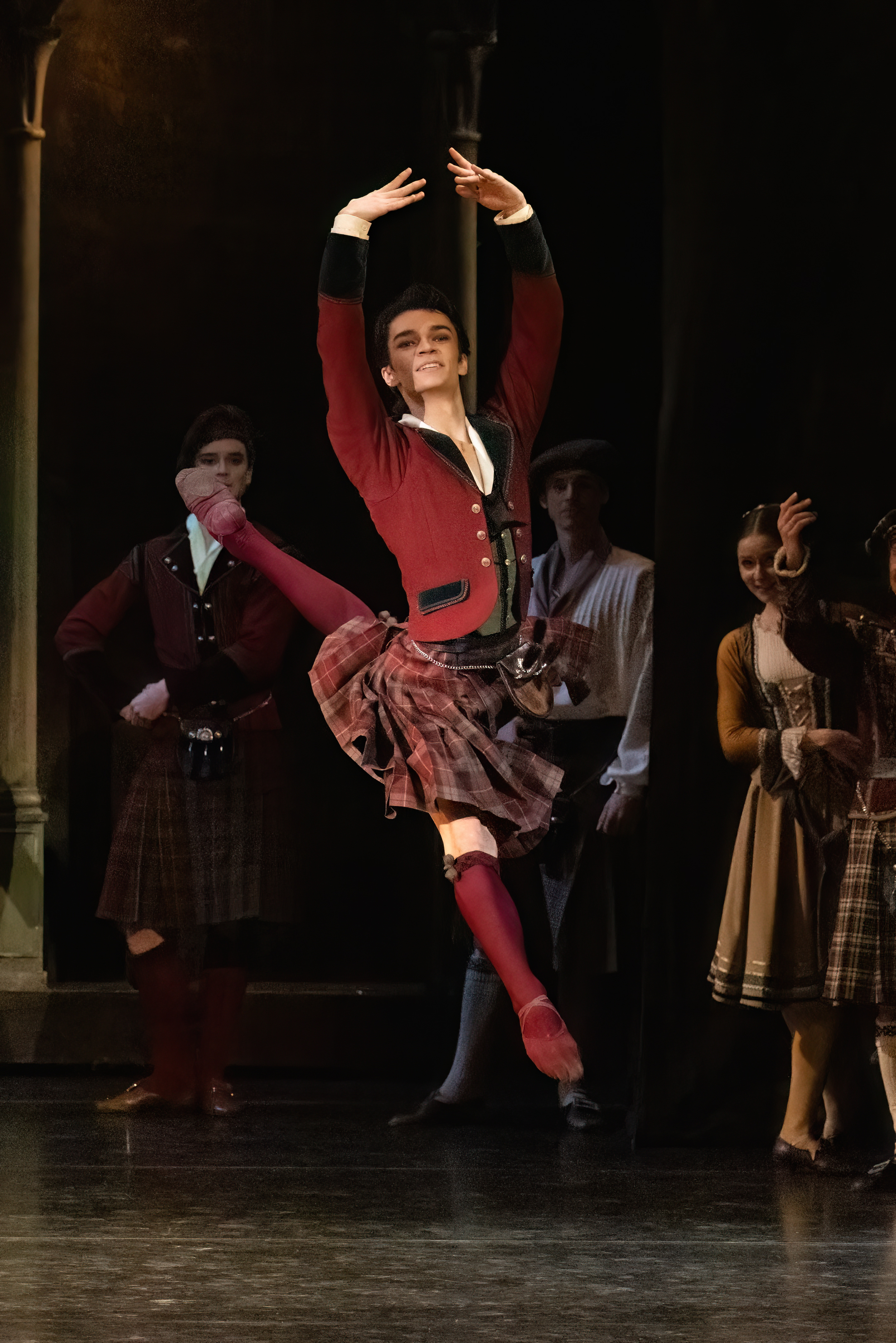
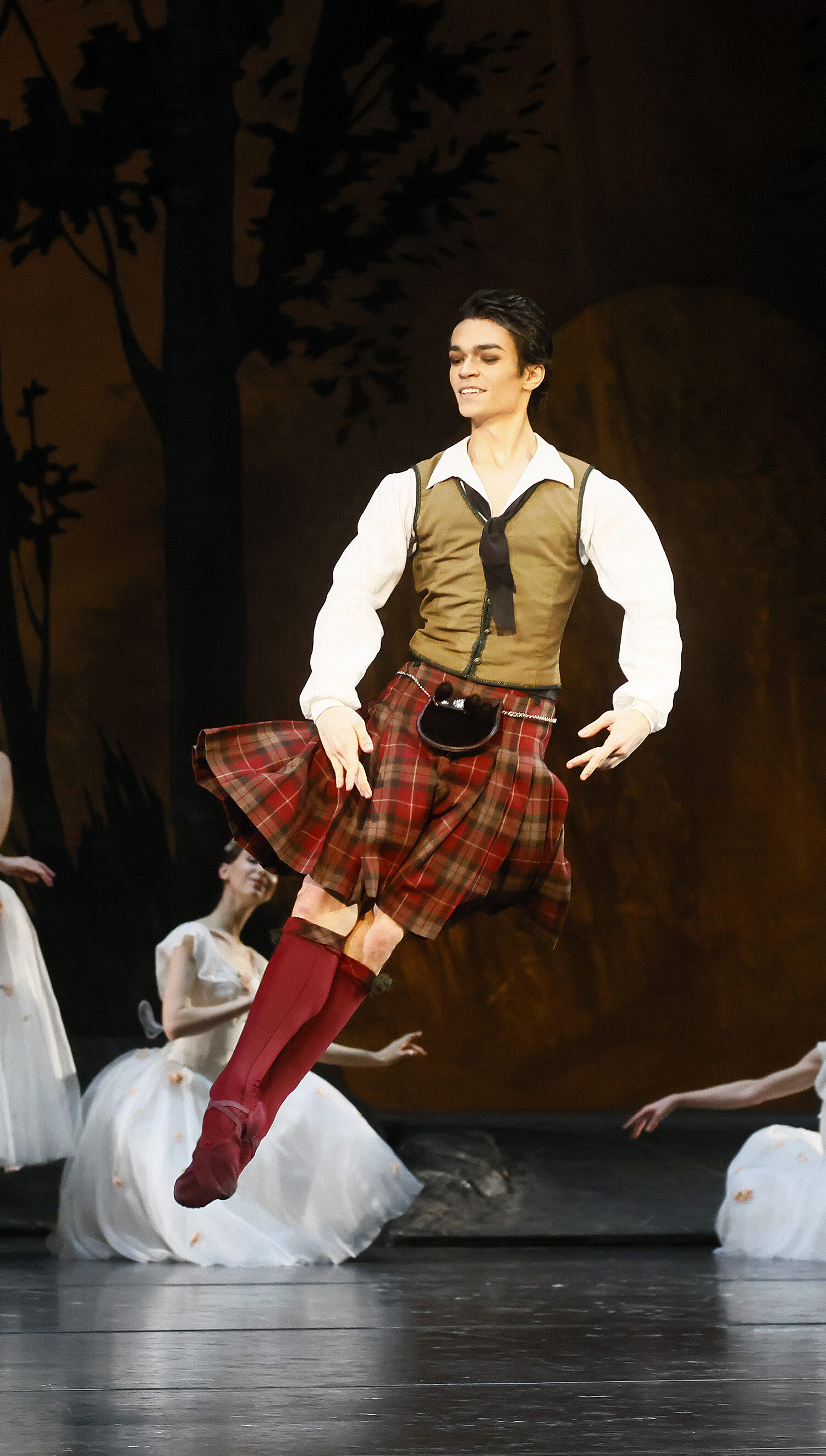
Among the performances easy for me to dance and that I enjoy, I’d single out “Marco Spada” and “La Sylphide”. Despite the fact that “Spada” is a long performance, I feel very tired after it, but I enjoy it because the choreography is convenient for me.
Even in “Swan Lake”, I get more tired in the first act than in three acts of “Spada”. As I’ve always said, “Swan Lake” is the hardest performance I’ve ever danced so far. However, at galas and pas de deux, I believe that every artist can try himself in different roles to the best of his ability.
Are there any roles that you would like to dance?
Yes, but I understand that I’m not ready for them right now, and they won’t look the way other artists do. For example, I’d like to try to dance “Ivan the Terrible”, but I realize that this is a very difficult part, not only physically, but also as the role of the character himself. To make it look convincing, you need to spend a lot of time working on it. I’ve also been dreaming of dancing Crassus in “Spartacus” for probably five or six years now. I realize that my emploi leans more towards princes, and I usually dance Jean de Brienne in “Raymonda”. However, my Bulgarian southern roots haunt me, and I really want to dance Abderakhman! I understand that a costume and makeup can save the situation, but I want to grow up first, so that it’s a hot-blooded male on stage, not a boy.
I guess I’ll never be able to play Spartacus. In my mind, he’s a man with a strong spirit, ready to start a rebellion. His power and energy should be visible when
he’s just standing on his feet. With my physique, it wouldn’t be easy. I look more like a slave lying there without food, almost dying! That image is closer to me.
I’m actually glad there are parts that I can’t dance yet. These are goals that always remain somewhere in the background, but they inspire and make you move forward.
Among the roles that I’ve not performed yet, there is “The Legend of Love”. I’d like to try the role of Ferkhad. To be honest, I’d like to dance almost the entire repertoire that runs in our theatre.
 How do you keep things fresh when you need to repeat a role?
Usually, when playing a role again, there are moments that are forgotten, and this is actually good, because it gives you the opportunity to rethink how to do it better. I try to state aloud the gestures that I use in my performance, and memorize them as phrases. If I understand that the phrase doesn’t add up, then something is wrong. There are times when we are limited in our abilities on stage, not everything can be expressed in words. In the same “Marco Spado” there is a lot of pantomime. Therefore, it’s important to run through the entire role in your head, so that even a viewer with little understanding will more or less understand it. It’s an important task to make everything clear on stage.
Do you do any cross-training to minimize or avoid injury?
I don’t know if other dancers will agree with me, but it seems to me that most injuries occur during rehearsals. Even if it’s a simple pull, for example, when your hip hurts, then you probably warmed it up improperly and weren’t ready for the workload. We’ve been doing this for many years, repeating the same movements every day. If you’re injured, you may have done something carelessly: you landed badly or couldn’t cope with the load on your legs.
But if it’s something light, like your back hurts the next day, it means you did something wrong before stretching. If we’re talking about serious injuries, they may be due to fatigue, exertion, or the fact that the body is just saying, “stop,” but you don’t listen to it and you go on stage.
We’ve had these situations. I always give the example of Vanya Poddubniy, I danced “The Legend of Love” with him as part of the “four friends”. The choreography in this production is so complicated that the day after the performance, my legs hurt a lot. For the first two acts we’re breaking our legs, there is a difficult variation. The third act is so emotional that it takes a long time to recover from it. It was always hard for me the day after the performance. If I came to class, I could only do the barre. I knew that I couldn’t do anything else, and I still had to practice carefully.
After “Legend”, Vanya and I had “La Sylphide” on the same day: mine in the morning, his in the evening. We had another rehearsal on the same day. And the next day there was another “Legend of Love”. We were standing in class, and I said, “Well, let’s do barre then go to rehearsal.” I did barre, and he said: “I’ll do an adagio in the middle.” I left. When I got to rehearsal, I found out that Vanya was in the infirmary with a cruciate ligament injury in his knee! He’d decided to perform double jumps, but his knee could not withstand the load.
 Usually, injuries occur due to overloading the body and loss of control over the body. This can lead to tears and strains. We often try to perform complex elements half-heartedly to understand how they work. When the body is relaxed, the slightest mistake can lead to injury. This happens quite often. Even when performing normal jumps on stage, when complex techniques are used, problems can arise. For example, ligaments may fail or an unsuccessful landing may occur. Sometimes we slip on the adhesive tape used to glue the floor together. Anything can happen. But the most important thing is how I warm up for the performance.
For me, when my body is ready to jump, I feel it and start preparing. Before the performance, I try all the elements and check to be sure nothing hurts me. I feel everything, I try everything, and everything works out. Of course, there is always the possibility of failure, especially when performing tricks such as the triple saut de basque. It’s an uncontrolled process, and sometimes you just don’t get lucky. I’ve also had moments when my knees started to hurt because of an unsuccessful landing. As you get older, you start to think about the consequences. In the early years of school, I could land from two tours without feeling pain in my knees. After my knees started to hurt for the first time, even kneeling on them for a minute became a problem for me. When we’re rehearsing, for example, the last scene from “La Sylphide”, where she goes blind and James is constantly kneeling, I can’t sit like that during rehearsal. I take my slippers off, put them under my knees, and kneel on them that way for the entire rehearsal, changing the weight between my knees. But during the performance, I do it the way you’re supposed to. If the pain coincides with what you have to do, then it’s unpleasant. I’m glad that so far there I’ve had no serious injuries. I hope that I can continue to work for a long time.
Is it enough to just come to class and rehearsals in order to stay in shape?
You always need to add something to keep your body in good shape and adjust it to a specific load. It’s useful to go to the gym and do strengthening exercises to build muscle, because interacting with a partner is one thing, but the gym and lifting metal are quite another. They develop important muscles.
The main thing for a dancer is to strengthen their back so that it can withstand loads longer, especially with my physique. If I rarely exercise, my muscles start to hurt.
Until the New Year, I went to the gym almost consistently three times a week. Then the Nutcrackers started all in a row, then we went on tour… I rarely get there now. As soon as you skip classes, something starts to hurt.
The thing that helps me is acupuncture. Not everyone likes this procedure, but I know that once I go through it once or twice, I feel better. When I started going to acupuncture, they told me, “You have a problem with your back, it’s very weak.” They immediately told me that my back, lower back, stomach and surrounding muscles were very weak. Accordingly, there’s a very high risk that if I lift something incorrectly, my back will hurt.
It’s been two years, and my back has hardly bothered me. I started going to the gym and went back to the same doctors. I haven’t visited them in two years. They say, “Wow, you’ve pumped up your back. It has become several times stronger for you. But now we have to finish strengthening everything else around it.” And I understand that I did this work for a reason. There’s always something to strive for and strengthen. This is important for dancers to maintain their health longer.
 These days we have the chance to keep our bodies healthy. We need to use these opportunities now so that we don’t regret them later in our old age.
We have a dancer who is completing his dancing career now due to seniority and age. He received a diploma as a personal trainer and now works with those who come to his gym. I also worked out with him for as long as I could at the start of last season. He recommended various vitamins that should be taken during exercise and which restore everything the body loses with exercise. That’s the only thing I use in almost every performance. I take a jar with me, and before starting, I mix these vitamins and amino acids, which support me throughout the performance, so that I have strength left. This is especially important in a three-act production: naturally, by the third act, the body is already exhausted, and it’s hard. But with the help of these vitamins, you gradually replenish everything, and it really becomes more powerful, easier to do this.
It’s not that I’m less tired, but it’s like I can last longer. I feel that I’m getting tired during the first act, but, for example, after the intermission I come out fresher, that is, I manage to recover.
Many dancers use massage. Massage doesn’t help me at all.
If something hurts, can you take some time to recover?
There are different approaches to this. At first, my parents didn’t understand how I could take sick leave or cancel a performance. They said: “You’ve been given a role now, they won’t give it to you later, you can’t refuse.”
I had “La Bayadere”, and I danced it the third time. The first time, my foot hurt a lot. I told Makhar Hasanovich, “I can’t do this right now.” The second time I had only a week to prepare, and I honestly said to him, “I won’t do this performance well in a week. I need time, let’s do it another time.” My parents said, “Why? You’re such a fool! They won’t give this to you anymore.” Sure enough, after that, they gave me The Golden Idol to dance. I went out in it a few times.
For a long time, my parents didn’t understand how I could afford to give up something, even if I had a little pain. But then they said, “No one knows your body better than you do.” I had periods when I danced through the pain. But after those performances, I couldn’t walk for a month.
It’s very important for an artist to feel his body and understand when to stop. If you feel that your knee is starting to hurt, don’t think, “I’ll wrap it now and it will be fine.” Because of the pain, you’ll try to land carefully in the jumps and work more with your feet. The next day, the pain may spread to the hip and then to the feet. And gradually it will cover the whole body until it becomes unbearable.
Especially at our age, it’s important to understand that there are still many years ahead that you can devote to dancing. Why torture yourself? Going on stage with a fever, unable to step on your foot, taking painkillers and continuing to dance — we’ve all done this repeatedly.
Yes, there are times when you can’t give up a performance because it’s your life’s dream. For many people, this can ruin their career: they wanted it, went out and danced, and then comes injury, surgery, and missed recovery time. And was it worth it? No audience member will thank you after the performance if you feel sick. They paid the money. They came, they want to see the performance/ No matter how bad you feel, you have to do everything perfectly so no one notices anything. I’ve come to this conclusion.
Nowadays I clearly understand whether I can do the performance, or whether I might feel bad and let down the director, my partner in the first place, as well as the dancer who will have to replace me. It also happens that the audience comes to see a specific dancer. Maybe they wanted to see me, but I danced one variation and goodbye. This is also a strange situation, because people buy tickets, look at the advertisements, and it’s better to let them know a few days in advance that you won’t be able to dance. Of course it’s hard to return tickets, but at least the viewer will know. Moreover, we now have social networks, there is a way to warn people in advance of any problems.
Today we need to hold our health in reserve for the future, so as not to waste it all by the age of thirty, and then barely walk when everything is cracking and falling apart. You always need to work wisely.
 But still, there’s a risk that they won’t give you the role next time.
I don’t really think about that anymore. I understand that my health is more important.
For example, if I signed a contract for a gala and something happens, I’m be forced to compensate for the cost of tickets. I know I’m going to die dancing it, but I have to dance. Otherwise, I’ll let down the entire company that invited me to do this six months prior.
I was in Japan just now, and I had six performances there. I clearly knew that I had to work through all six. In this case, once again you don’t try anything extra in rehearsals. You do everything carefully once on stage, and that’s it. There is no rehearsal process in which you have to kill yourself.
We need to work wisely so that we don’t stupidly run through the whole show every day and try to do everything today, tomorrow, the day after tomorrow. You need a little bit one day, a little bit the next. It’s not necessary to run through the variation in full each and every time. The main thing is to work on the mise-en-scene one day, jump a little bit, go through all the adagio with the ballerina the next day, for example, and check the mise en-scene again. So I’m gradually finding my own system of how to prepare for the performance, so that it’s as safe as possible, and I go into it as healthy as possible.
For me, the day before the performance, of course, I don’t jump into full with all my variations, I can try a few elements a little bit, or, for example, tell the concert master: “Play me the whole variation.” And I do the first part a little bit, skip the second and do the end. That is, the load is maximally reduced.
And on the day of the performance, I try to skip class and arrive in the evening closer to the performance, so that I don’t spend the whole day traveling or getting tired. I give myself a full barre, warm up, fully prepare my body specifically for the performance. Not just a set of movements based on a book — tendu, then jeté — but exactly what I need, what warms me up. Then during the performance I feel like I have more strength, I’m ready for it. This is all learned, of course, through injuries. Even if I told all this to some young dancer who was just about to come to the theatre, he’d listen, not draw any conclusions before the first injury, and as soon as his knees start to hurt, his back starts to hurt, he’ll immediately understand that you have to work like this, and then he’ll understand the approach that works for him. There is no such thing as “it’s convenient for me, so it’s convenient for everyone.”
It’s good that they give you the freedom to prepare the way you wish on the day of a performance.
Many dancers say, “Why you don’t go to class in the morning before the performance?” I say, “If I go to class in the morning, come home, and go to bed, when I wake up, it’s like I haven’t taken class. Why do I need morning class when I can relax all day, completely relax, no one is there, come to my senses, run though it mentally in my head, then arrive at the theatre in the evening, and I have a lot of time on stage, with an open auditorium. I can warm up, do barre, there’s enough time. I’ll be in good shape for the performance, ready, confident that I’ve checked everything, everything is ready. Again, everyone is comfortable in their own way, everyone has their own warm-up, their own system. That’s exactly what makes ballet so interesting. Everyone has their own approach, everyone has learned something new from their injuries. There are only a few dancers without injuries. As if the body’s wear and tear is rampant.
 So, the issue of injuries is one of the most difficult in your work?
Yes, but for me, another difficult moment is the feeling of emotional emptiness after a performance. When I go on stage, I give my all, all my emotions. And after the performance, when I come home, I don’t want to eat anything, and I don’t have the strength. If I receive flowers, I feel like a hero if I just put them in a vase. It’s as if I’d ran non-stop for two weeks, and then sat down to rest. For me, this is one hard part of the job that needs to be accepted. Especially when it’s a drama-based production like “Chipollina” or one with a childish, feigned Mercury. When there’s only one variation, and everything else is acting. In a very short period of time, it is necessary to show the character’s fate. After such performances, I’m always in a bad mood, I don’t want to do anything, I don’t have the strength.
And, of course, injuries are unpleasant.
What do you like most about your work?
The most pleasant thing is when, after the performance, someone comes up and says that he was touched to the depths of his soul. As great people used to say, if at least one or two people leave the theatre after the performance and something in their lives changes, then it was not in vain. That’s the best part. It’s also nice when, after a performance, someone writes or says something like “today was amazing” or “the performance brought me to tears.” It’s nice, even if you know deep down that something wasn’t perfect. When at least a few people have a strong impression, it touches me to the depths of my soul.
A few days before our tour, Margarita Schreiner and I performed at the annual “Medics Ball” in Moscow. As far as I understand, this is an alumni event. We danced a fragment from the ballet “Pharaoh’s Daughter” – an adagio from the third act. The host of the evening, a person clearly connected with art, came up to us after the performance. She said a lot of warm words. She called our art “high” because it deeply touched her. She added that if art doesn’t touch you, then it’s not art. The presenter expressed her gratitude to us for our hard work. She said that we are real fanatics who have studied for eight years and continue to work hard in this profession. I couldn’t find the words to express my gratitude. That day, we were able to change a person’s life through dancing – they cried, laughed, and enjoyed himself. It seems to me the greatest way to show gratitude to a dancer is not flowers, not congratulations, not praise from superiors or colleagues, but words from the audience.
You have extensive experience touring and performing abroad. How are you being received by the audience abroad?
When we go on tour to other countries where the public does not know us, we are often greeted on the street with gratitude and a desire to see us again. This is when we realize that we studied and work for a reason. This is important, especially in these difficult times. It’s hard for us dancers when we can’t travel abroad. For us, it’s like an exchange of experience.
I’ve only been to the Paris Opera for one day, but just to see that place and practice a little bit there is already something special. How can people study and rehearse in a museum like the Paris Opera? It seems incredible. And since everyone has different schooling, movements are performed in different ways, and this is an interesting and useful exchange of experience that we get during such trips.
How and where do you vacation? What is resting for you?
My teacher, Andrey Leonidovich, is does archery professtionally. He has almost received his Master’s of Sports diploma and sometimes comes in with cups from competitions. One day he asked me about darts and hung up a dart board in his dressing room. It was interesting for me to try myself in a new sport.
As a child, I often vacationed in Turkey, where playing darts is a popular pastime. Gradually, I acquired a dart board and hung it in the theatre. My dressing room colleagues were inspired by my example and started playing darts. As a result, almost our entire dressing room participates in this exciting activity! We have our own team, we even go to competitions. Sometimes I do it alone, and sometimes with a team. These competitions bring together teams from different corporations.
I always try to find something to do to take my mind off ballet in my free time. If I have the strength, I can go for a walk, or go to my summer dacha to be with my family. When it’s warm, I like to swim.
My vacation is usually active, but I don’t always want to spend it as actively. Sometimes, on my only day off, I just want to sleep. In the summer, I try to find an opportunity to work and combine it with a vacation. This year, I also plan to combine rest and work.
Itэs very important for artists to be able to find a place where they can relax and distract themselves. For me that means different hobbies: darts and sewing bags made of leather. These things help me to relax and switch away from thoughts of ballet to something else. I really like to play various games, and, of course, I have a console. I think I’ve collected all the possible hobbies.
Is there a chance that people in Europe will see you again?
I’m very glad that there is such an opportunity now. Lisa (Kokoreva) and I were probably the first to be invited to a gala concert in Italy two years ago. This caused a real scandal. Many could not understand how this was possible.
Naturally, during the interview we gave, we were asked only about political topics. There were rallies near the theater, which were dispersed, and it wasn’t easy for us. But we didn’t feel much pressure. During the interview, we had no choice but to simply say, “Next question.”
I wanted to emphasize that art is outside politics, and we have nothing to do with political issues.
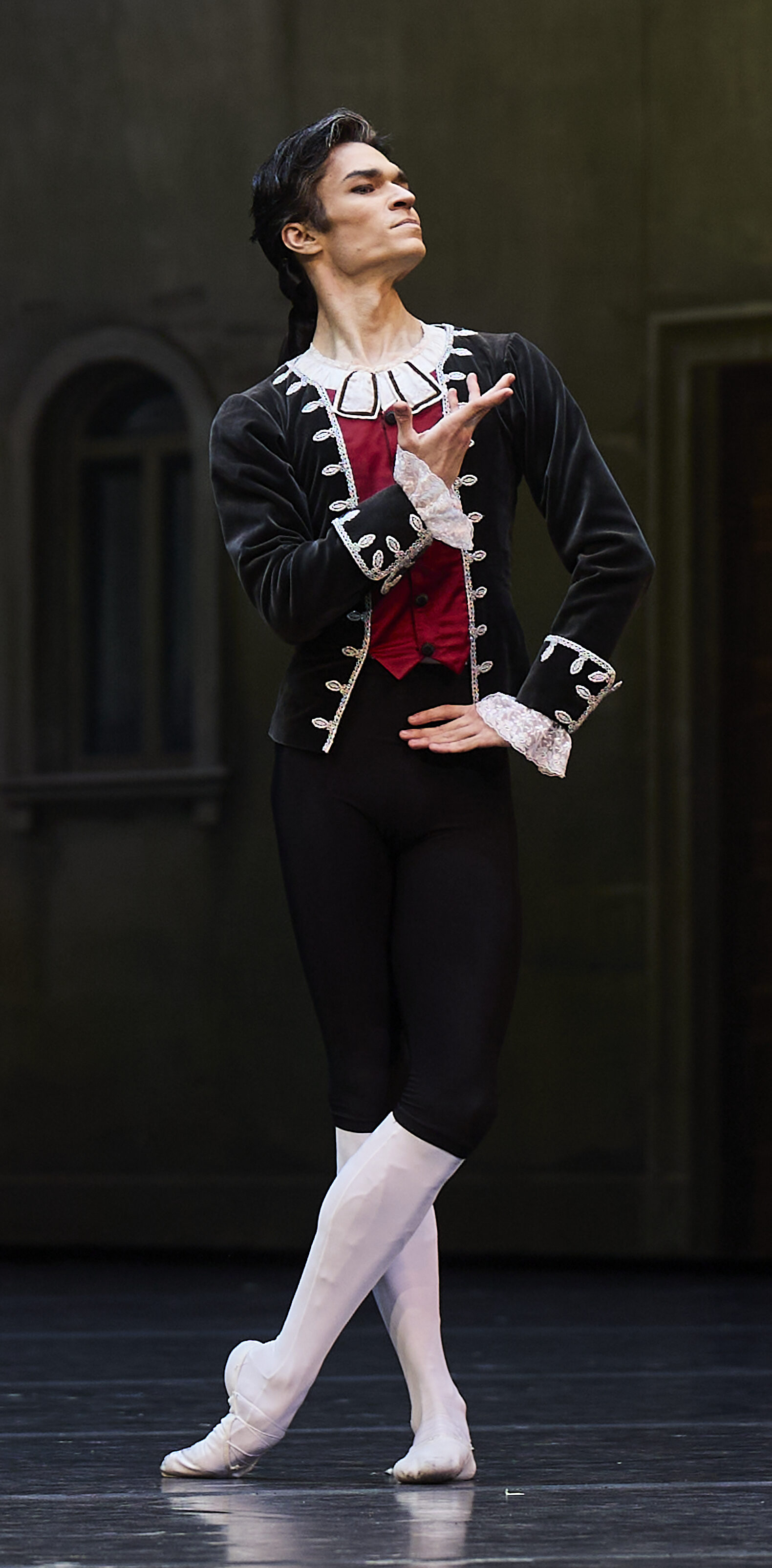
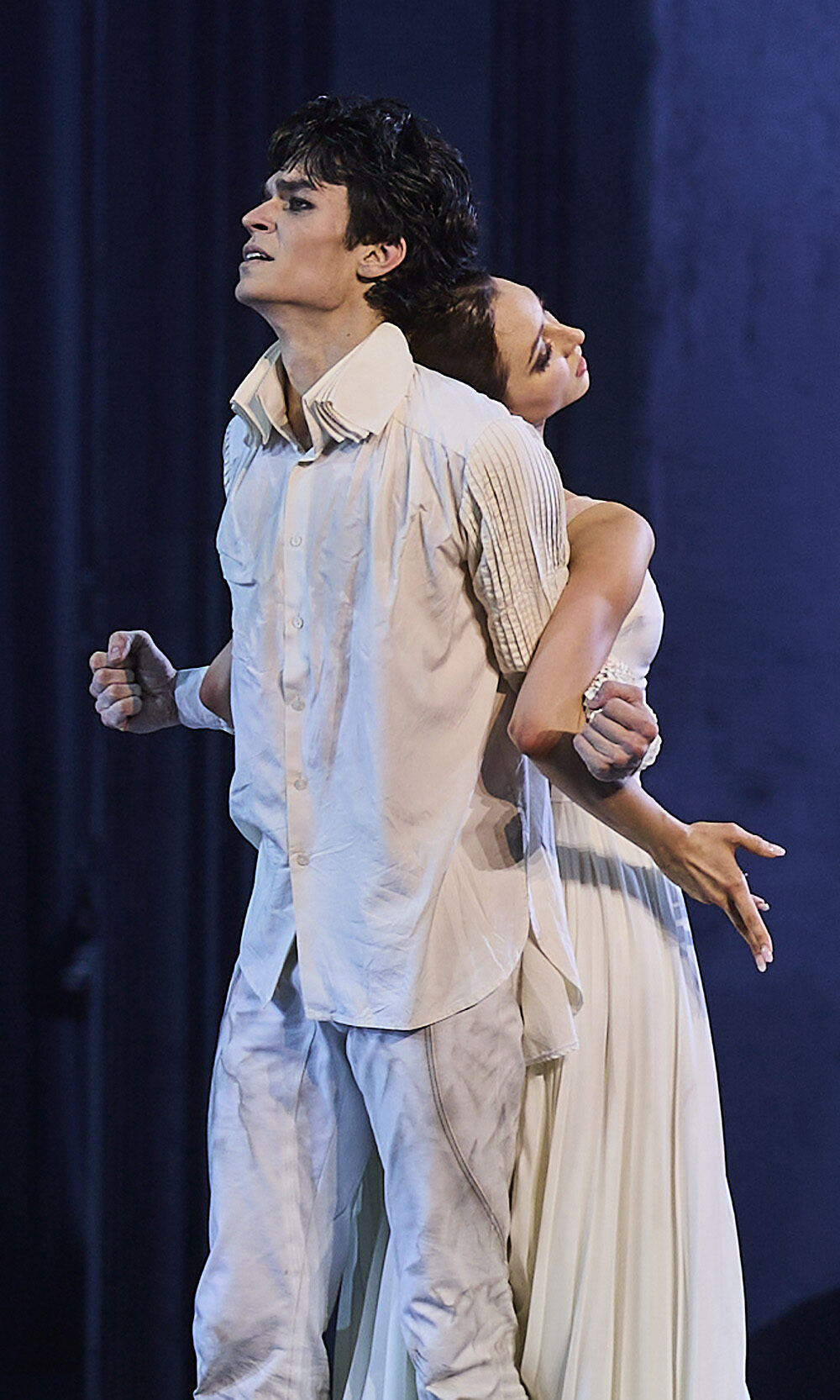
Photo above: Dmitry in “Queen of Spades”
I agree that art can and should unite countries, not divide them. It cannot be used as a weapon. You danced together anyway, in full sync at that concert, but without music
Yes, they also turned off the music then. But the audience who came clapped for us almost through the entire dance, that’s how much we danced without music, they clapped for us because they realized that it was an accident.
It happened by accident, we checked everything in advance. It happens. Not only there. There are often problems with music. I also went to the Czech Republic once, when I was still dancing at the Academy. Instead of “Corsaire,” they turned on “The Nutcracker.” It happens. This isn’t a negative, but on the contrary, an indicator of our professionalism: We can dance even without music.
For example, Lisa had another piece of music played for her variation. Instead of “La Sylphide,” she was given “Marco Spada.” She was able to combine Marco Spada’s choreography with “Sylphide” and create something of her own. Of course, I was screaming at that moment, “That’s the wrong music!” As a result, she ran off the stage, the music was changed, and we repeated the number. Both days were fun.
Thanks to Daniele Cipriani, who invited us. He was the first to take such a step and said, “I don’t care about public opinion. I want to invite you because you dance well.”
You were also in Paris…
Yes. A little over a year ago, Eleonora Abaggnato wrote to me. She happened to see me on social media and invited me to dance in her concert in Paris in February 2025. I was supposed to dance with Yana Salenko, who, as we all know, does not work in Russia, but was born in Ukraine. I understood that dancing with a Ukrainian woman in Europe is a chance that cannot be missed. This proves once again that art is outside politics, because if we can communicate together, then so can others.
It so happened that many refused to participate. Some dancers could not come. I know some dancers found out that I was dancing and refused to come. There were artists who said, “We will not go on the same stage with the Russians.” As a result, I had to dance two numbers with Yana. But everything changed. I danced the pas de deux from “The Flame of Paris” with Yana Salenko and “Don Quixote”.
We met there for the first time, rehearsed one day, and danced the next day. It was the biggest tour of my life. Before that, I was invited to dance in Rome, where I spent two days, and then one day in Paris. It was a kind of “European tour”.
When the opportunity arose to go there, Eleanor immediately wrote to me to find out if I could come to Rome again in October. They invited me on purpose.
What surprised me the most was that this time the audience was very friendly. During my visit, there were no interview questions or any expressions of condemnation from the audience. Everything went smoothly and without any problems.
I hope that sooner or later we will come to the same understanding, especially in relation to people from the art world who have citizenship from different countries. We danced, and our activities were not related to politics.
In my interviews, I’ve always said: “If you want to talk about politics, talk to politicians. If you want to talk to an artist, let’s discuss art.” My opinion is that you shouldn’t be interested at all in what I might say about politics.
This is my subjective opinion. I will never voice my opinion on any political issues, especially in another country. They’re waiting for statements that I’m against Russia. They don’t think about it. They just want one answer, that we’re all against a certain government, and then they want to publish it everywhere.
When Lisa and I went to Europe two years ago, we needed to buy something, so we went into a Diesel store and we also looked for cosmetics. When we entered, it immediately became clear that our English was not perfect. The sellers asked, “Where are you from?” We had a hard time, but we answered anyway: “From Moscow, Russia.” They were very happy, “Oh, I have a grandmother and family there, I was there and it was great.” They never told us, “Ugh, go away, everyone.” So I thought that all is not lost.
That’s why I’m very glad that now that I’m traveling, I don’t encounter any questions. I’m grateful we can focus on art. The audience welcomed us warmly, and when we left, we were greeted by a huge crowd. I thank them.
What’s the most difficult habit for a principal dancer? The ability to relax? Or maybe daily stretching?
Everything related to exercise and stretching is very difficult for me. I get bored when I just sit on the splits and do nothing. I want to pick up my phone and start watching videos, and if I do that, then I’m not in the splits anymore. So the most difficult thing for me is to start the day, warm up somehow and prepare for it. This is probably the most boring process — preparation. The performance is understandable, it’s all emotions, rehearsals. But the warmup is the least interesting, but the most important and the most useful.
Do you have any superstitions or rituals before going on stage?
I try not to bind myself to any rituals, because then it starts: I went on tour, I forgot to take something with me, and you immediately think, “The performance won’t work.”
Have you had any strange incidents on stage?
Yes. My favorite case on YouTube has gained about two million views. It’s not my video really, someone else posted it. My ballet shoe flew off my foot during a variation. I was doing entrechat six, then some batterie and two pirouettes, and ballet shoe flew off, and I just kept dancing until the very end, nothing changed. The pirouette turned out well at the end. And there was twice as much applause as usual, probably because everyone understood everything! I picked it up in such a funny way, then I got lost in thought and ran off the stage. I used to laugh others and think, “Why are you all sewing on your ballet shoes? They don’t fall off.” From now on, I always sew my ballet shoes to my tights. No matter what I dance, I always have my shoes sewn on.
I have fallen on stage, I slipped on the tape. It was in “The Nutcracker”, in the role of a Chinese doll. Probably one of few who fell like that. There weren’t many cases, but they were funny. I’ll remember the situation with the ballet shoe for the rest of my life. It has so happened that someone did not go on stage, or there have been strange mise-en-scenes, this also happens.
Even in “Marco Spada” (in St. Petersburg) we just before the pas de deux, the man who was supposed to take my raincoat didn’t come out on stage. So I threw the raincoat to the corps de ballet, onto one of the guys’ heads. I hear them laughing, and I start laughing myself!
And at the end of the production, when Marco Spada dies, he kisses Angela on the forehead, kisses Federici on the forehead, as if to say: “I bless your union.” I kiss Angela like that. Usually I’d hug Federici because he’s a man, and otherwise it looks weird. Then I remember that Spada kisses the character on the forehead. And he (Frederici) starts lifting his face, and I kiss him practically on the nose! I just froze and stopped. In this scene I am dying, and it breaks you but if you lose your composure, that’s it. So there are such moments, but the main thing is to stay on stage, because, of course, you can’t laugh at the moment of a character’s death. It would be unforgivable in such a performance.
Do you have a favorite dish or cuisine?
I really love Japanese cuisine. Since I was raised on Russian cuisine, I don’t eat much raw food, but I really like sushi. I love Georgian cuisine and, of course, Russian. I would have to include Italian on the lsit. Hamburgers are probably one of my favorites too.
Philosophical question: Is there something that people should know about you, but don’t know yet?
I’m an ordinary simple person, I like everything I do, I always want to find something new. I really like people with a good sense of humor, with self-irony, preferably so you can joke about yourself.
Smile. I always stick to this: “smile and everything will be fine”. You always need to treat everything with a positive attitude, with humor, and be able to see the good in any offensive or sad situation and cling to it in order to move on.
My last name is Smilevsky. In English, it’s a “smile” at the beginning, which is why everything worked out so well. It’s also convenient when I sign autographs at concerts, I always add a smiley face. It’s like my brand name and signature.
If you were giving advice to young people, especially young men who want to become ballet dancers and work in the theatre, what would you advise them?
My favorite phrase is, “The most important thing is starting.”
Here’s a tip for those still studying: know that the teacher is the most important person in your life. You need to find your teacher and build the right relationship with him. Listen to him and trust him, because without trust between the student and the teacher, the workflow cannot be properly structured. If you don’t believe the teacher, if you think you know better, no one forbids you from transferring to a different one. But it’s not worth continuing to work in such an atmosphere. You need to try to find lessons on the side, ask for advice, because while you’re training, the teacher is the person who shapes you as a person in ballet, lays the foundations, and whom you will remember all your life. You’ll remember him either in a good light or in a bad one.
The Moscow Ballet Competition was held this summer. It’s always interesting to watch because guys from different countries participate. This is also an experience that is currently lacking: you can see how they work in other theatres, in other schools, and maybe learn something new. The most important thing in ballet is experience. Young dancers always need to take the advice of the older generation. Later they can decide whether to use the advice or not, but everyone has taken this path that they already know everything. It’s better to listen 10 times than to step on the same rake and still come to the same conclusions.
This means you should always respect your elders and their advice. If they say, “Why are you doing this step here? It’s not set that way,” they don’t do it out of spite, but because they worked with the directors, sat in the studio until they were exhausted, went through this choreography, it was drilled into them, “Here it is, here it is.” But here you arrive and do as you want. Naturally, they’re offended.
I realized this when a production was being staged and later I saw that dancers were dancing it differently, more easily than it was originally set. I thought: “Why is that?”
Only later, as I got older, I began to realize that no one wants to make you worse, no one is jealous, they are just trying to pass on the knowledge that the directors passed on to them. Senior dancers will always help, prompt and share their experience, because it’s nice when they are asked for advice, it is a manifestation of banal respect. You think someone is more experienced, older, and he knows how it should be. You ask them for help because you respect them.
For example, Andrey Bolotin and I were working, and we were working on Spartacus’ monologue in chains. I knew that Andrey Leonidovich had never danced “Spartacus” though he knows the choreography because he rehearsed it. So he and I approached Mikhail Lobukhin [principal dancer, Bolshoi Theatre, formerly with the Mariinsky Ballet] because, in my opinion, he is one of the best Spartacus I have seen. To me, he looks like this character on the outside. Since we had to learn this role, I knew we had to try hard and not do it haphazardly. So we invited him to come to rehearsal. I think he was pleased that young dancers respect his work so much. I was happy he agreed to help. He explained every step, every move.… He knows the meaning of all the gestures in this performance. And this is valuable, it is necessary for all young people to grasp it while there is an opportunity. So always be interested, always ask.
Do you believe in Fate?
That’s a difficult question for me. Since I’m not superstitious, and I’m not religious in general, it’s probably easier for me to say no. The only thing I believe in is luck. Especially in our business: in addition to talent, the desire to work, and some inborn traits, luck is very important.
As it happens, I’m lucky in many ways. Starting from the fact that I was born into a ballet family, I was lucky to have such teachers. I joined the theater under a director who has a policy of, “make way for the young.” If I’d joined the theatre under other management, maybe things would have turned out differently.
Previously, to become a soloist, you had to dance lots of roles for four or five years, to earn it, and essentially be a prepared principal dancer just to become a soloist. And I’m not even talking about how long people waited for principal dancer status before.
It is also lucky in my case that I was promoted to principal dancer early, and I didn’t go through the soloist stage. I participated in the Moscow Ballet Competition four years ago, won the gold medal, and everything worked out — I was lucky. I wouldn’t say it was fate, because at any moment I could have made a different decision and everything would have gone wrong. But I was born when I was, and events took place as they did. Sometimes it doesn’t work out for people who are very talented, but weren’t there at the right time. They were just unlucky.
I believe in luck, hard work, and talent.
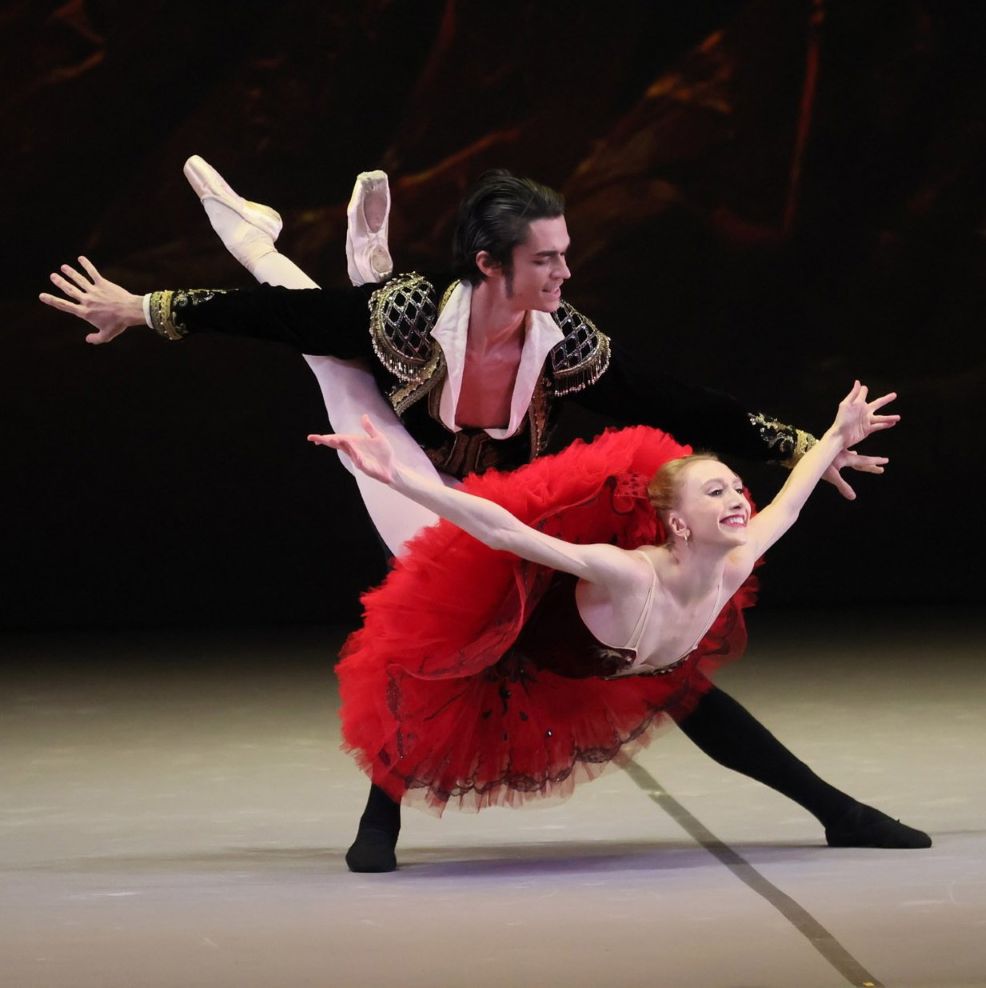
Photos of Dmitry in “Marco Spada” all (c) Mikhail Vilchuk 2026 for the Mariinsky Theatre; “Don Quixote” by Sila Avvakum; in “The Queen of Spades” by Mikhail Vilchuk (c) Bolshoi Theatre. Images in “La Sylphide” by Mikhail Logvinov and Damir Yusopov for the Bolshoi.
With special thanks to the Mariinsky Press Office and Bolshoi Press Office for helping arrange the interview.